Flamenco
A true flamenco guitar is an instrument born for pulse, rhythm, and raw human emotion. It requires an immediate, lightning-fast kinetic response—where the notes explode off the soundboard with a crisp, percussive bite before resolving into a clear, biting growl. A Flamenco is a drum; a string instrument.
I began my guitar building with Flamencos & it sits at the very root of my luthiery. It’s where I look to test the edges – how light, how fast how thin can I go. Hand-sculpted in the quiet focus of my mountain studio, my flamenco guitars are built for players who demand profound dynamic sensitivity, low-slung athletic playability, fast… and an instrument with an absolute soul.
Scroll down to explore the unique artisan geometries, lightweight traditional tonewoods, and percussive design choices that give these instruments their true Spanish snap
Built with patience, from my hands to yours.
The Flamenco Setup: Speed, Growl, and Low-Slung Action
Unlike its classical sibling, a flamenco guitar demands a different physical architecture. To achieve that authentic, fiery speed, the fingerboard is planed with distinct geometry—allowing the strings to ride incredibly close to the frets, sitting at a low-slung, athletic height.
Do we add relief? Do we go flat?
Well… it all depends…
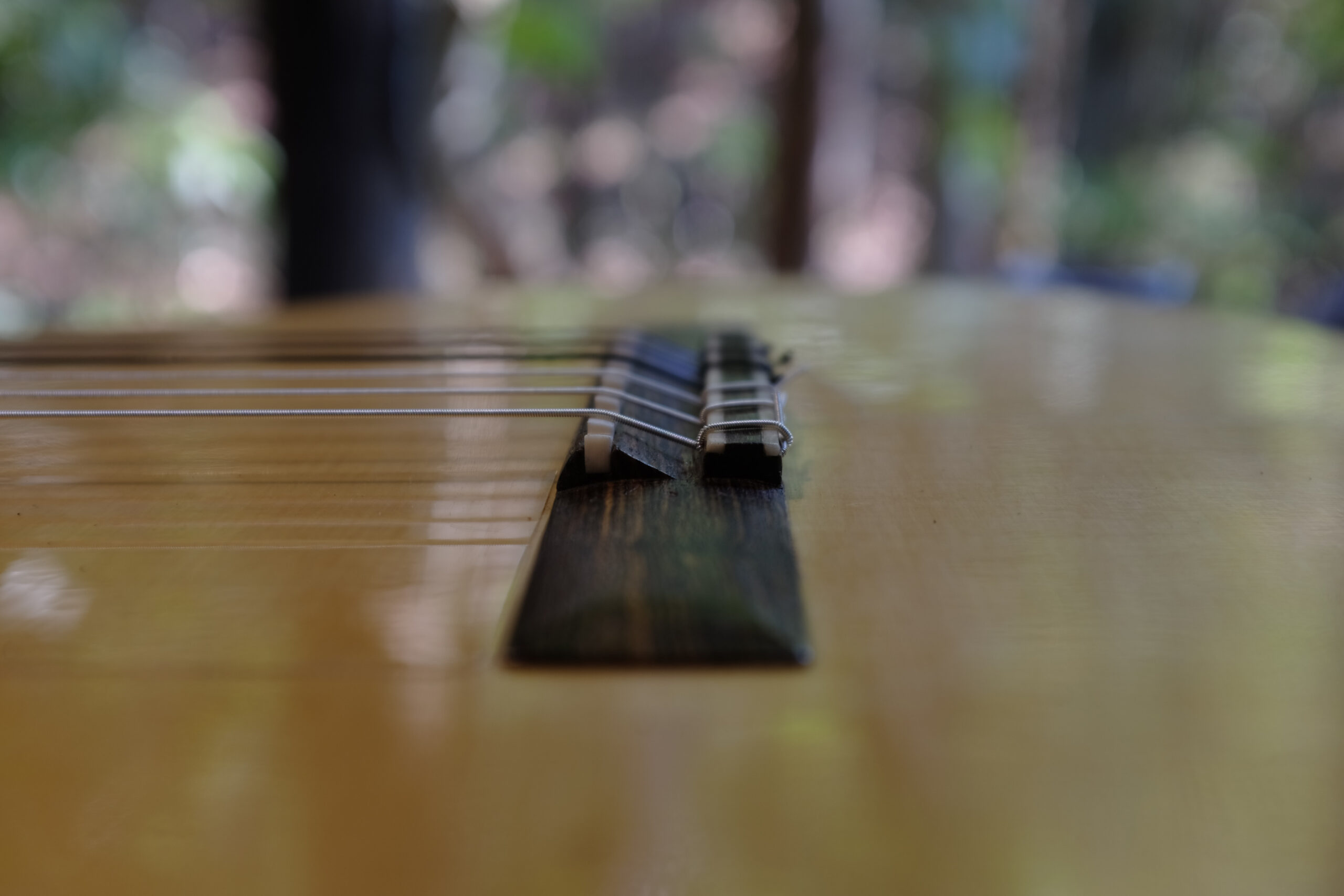
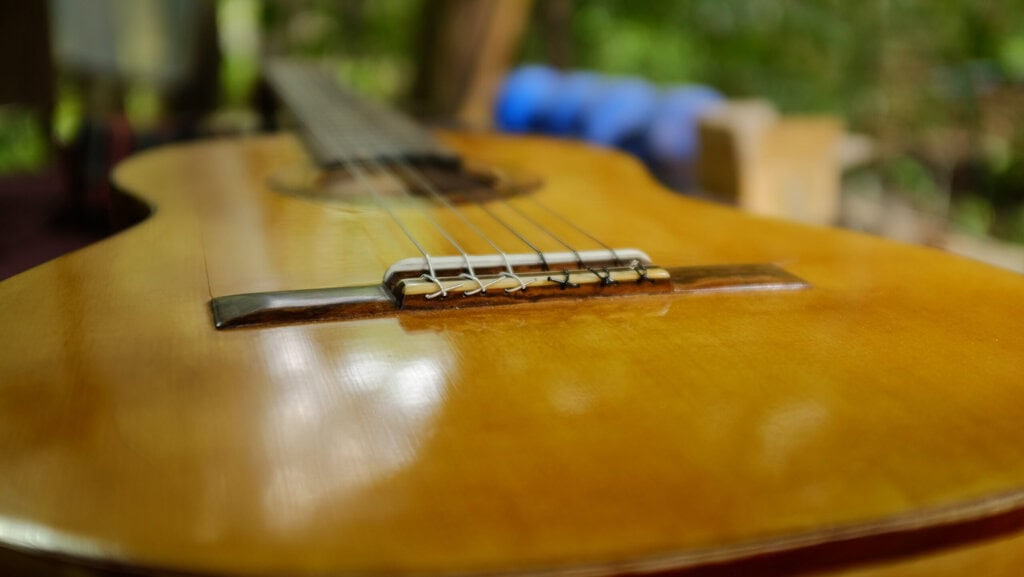
The neck angle is meticulously set up in the Solera mould so the string height at the 12th fret hovers tightly at a comfortable, fast profile, while the saddle sits low and close to the soundboard. The distance between the strings and the top is very particular to many flamenco players.
This specific structure creates an immediate, low-resistance string response, producing that signature, percussive flamenco “growl” (ceceo) when pushed, allowing rasgueados and single-note runs to slice through the air with zero resistance.
Fast and light.
🪵 Section 2: Materiality & Form (Blanca vs. Negra)
Lightweight Resonance: Honouring the Landscape
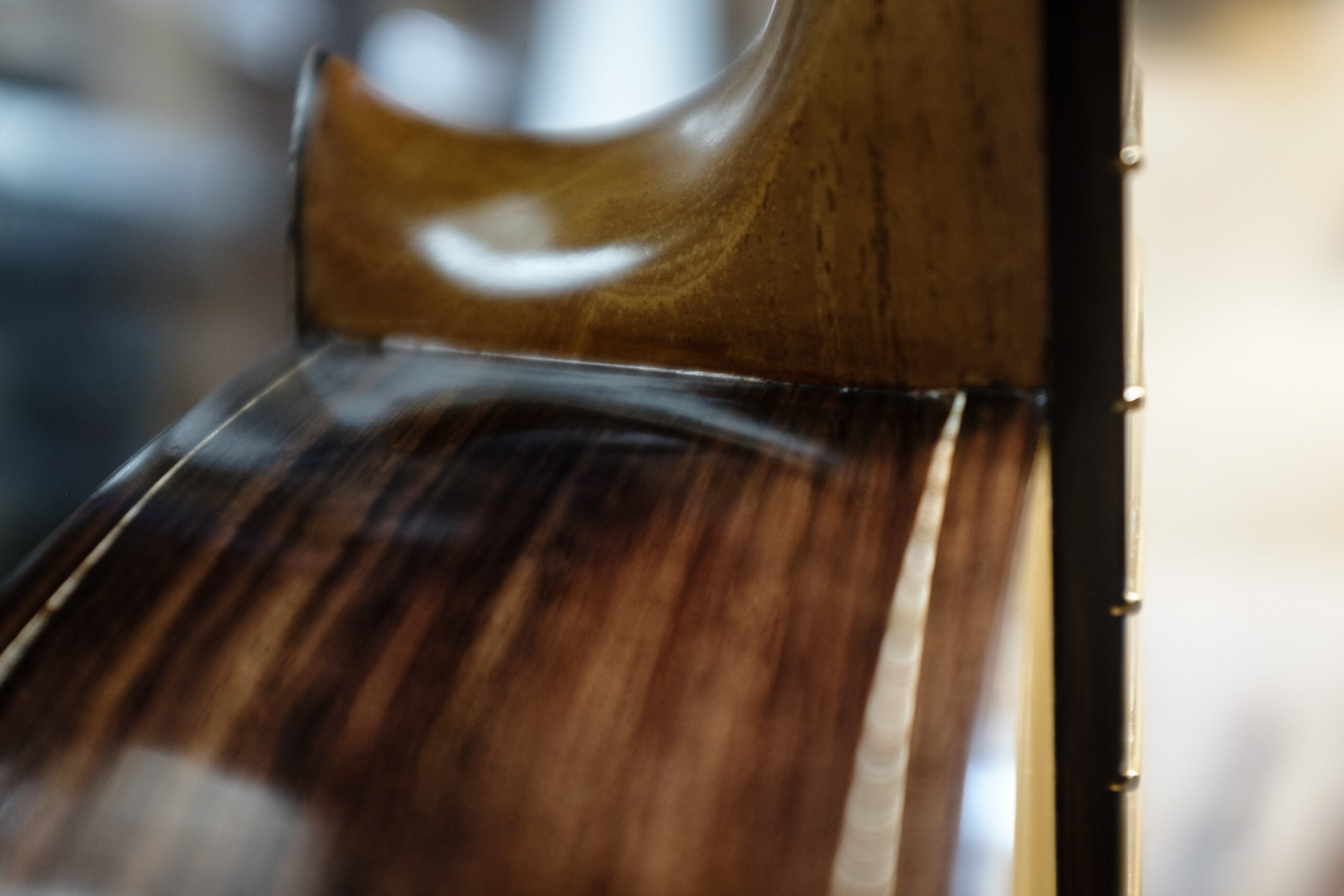
The weight of a flamenco guitar is crucial to its voice. It must feel exceptionally light, reacting instantly like an acoustic mirror to your fingertips. I draw inspiration from legendary building patterns – Santos Hernandez in particular – to balance weight and structural power, selecting premium, hand-chosen materials to form the back and sides.
Whether crafting a traditional Flamenca Blanca using crisp, lightweight Canadian Cypress (Alaskan Yellow Cedar) for a bright, explosive percussive snap, or a Flamenco Negra using dense Rosewood or local Thai timbers such as Mai Daeng for added warmth, projection, and deep overtones, every wood selection is driven by a deep reverence for the natural world.
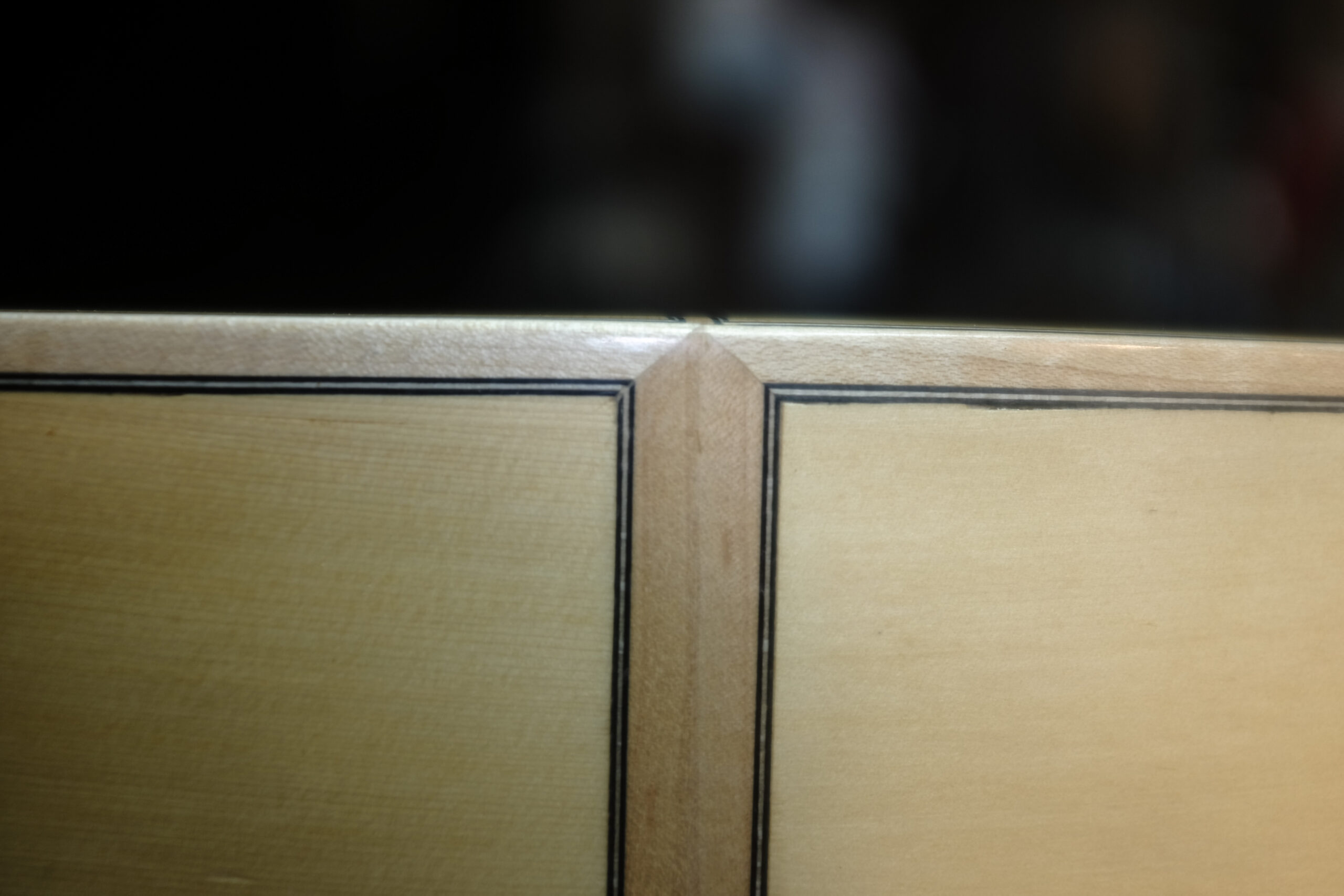
Quarter sawn woods, ensuring the top is light enough to breathe but strong enough to endure decades of passionate play.
Golpe Plate: A Soundboard Shielded for Rhythm
A flamenco guitar is both a melodic voice and a percussive canvas.
To accommodate the sharp, rhythmic taps of the fingernails (golpes) that are integral to the tradition, the soundboard is fitted with a clear flamenco golpeador (tap plate) on both sides of the soundhole.
This transparent shield is meticulously bound to the spruce top using a seamless process, protecting the delicate French polished soundboard from wear without dampening the acoustic flexibility of the top. It turns the entire guitar face into a resilient rhythmic arena, allowing you to strike the soundboard confidently while keeping the visual purity of the natural wood grain entirely on display.
Into the Nitty Gritty
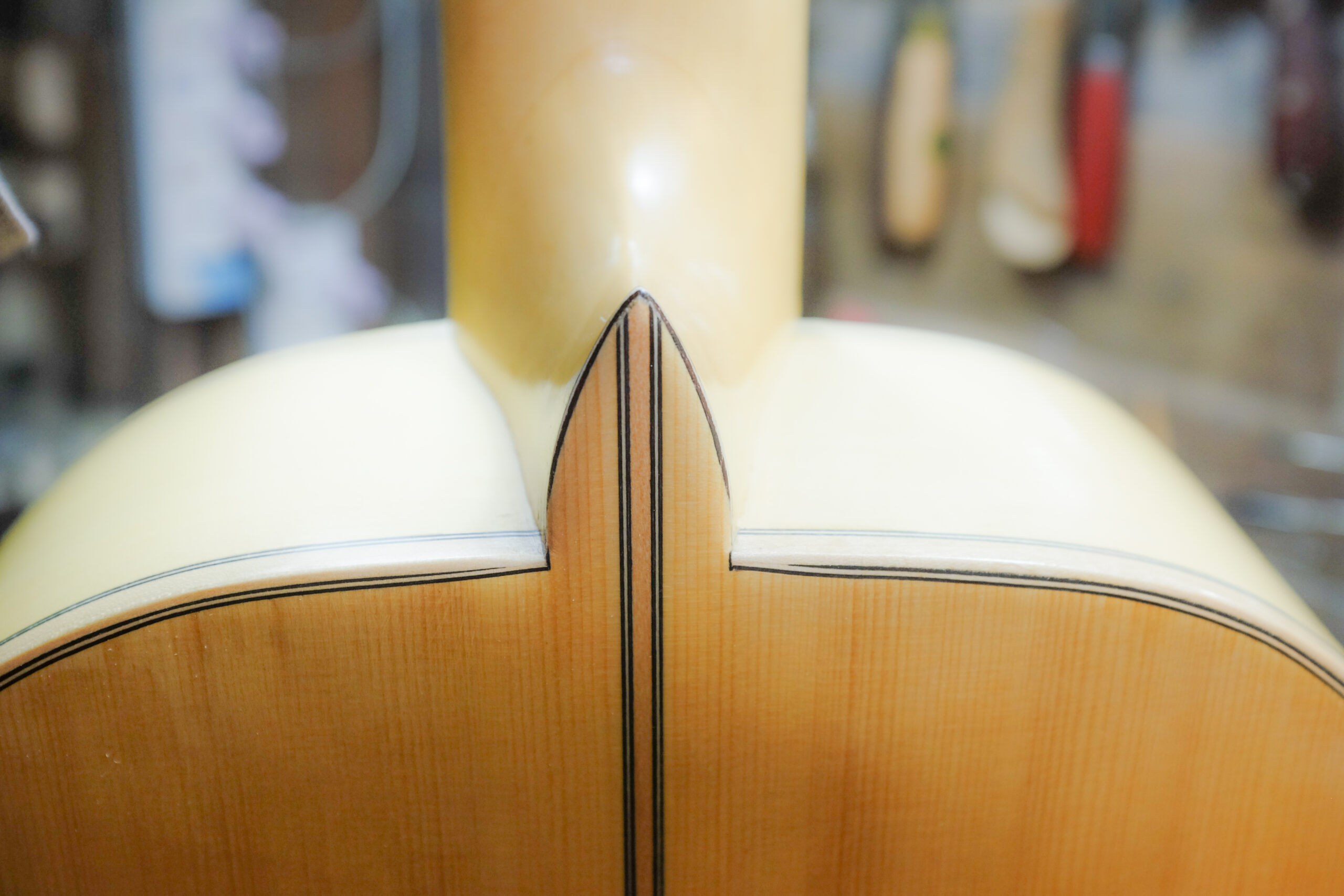
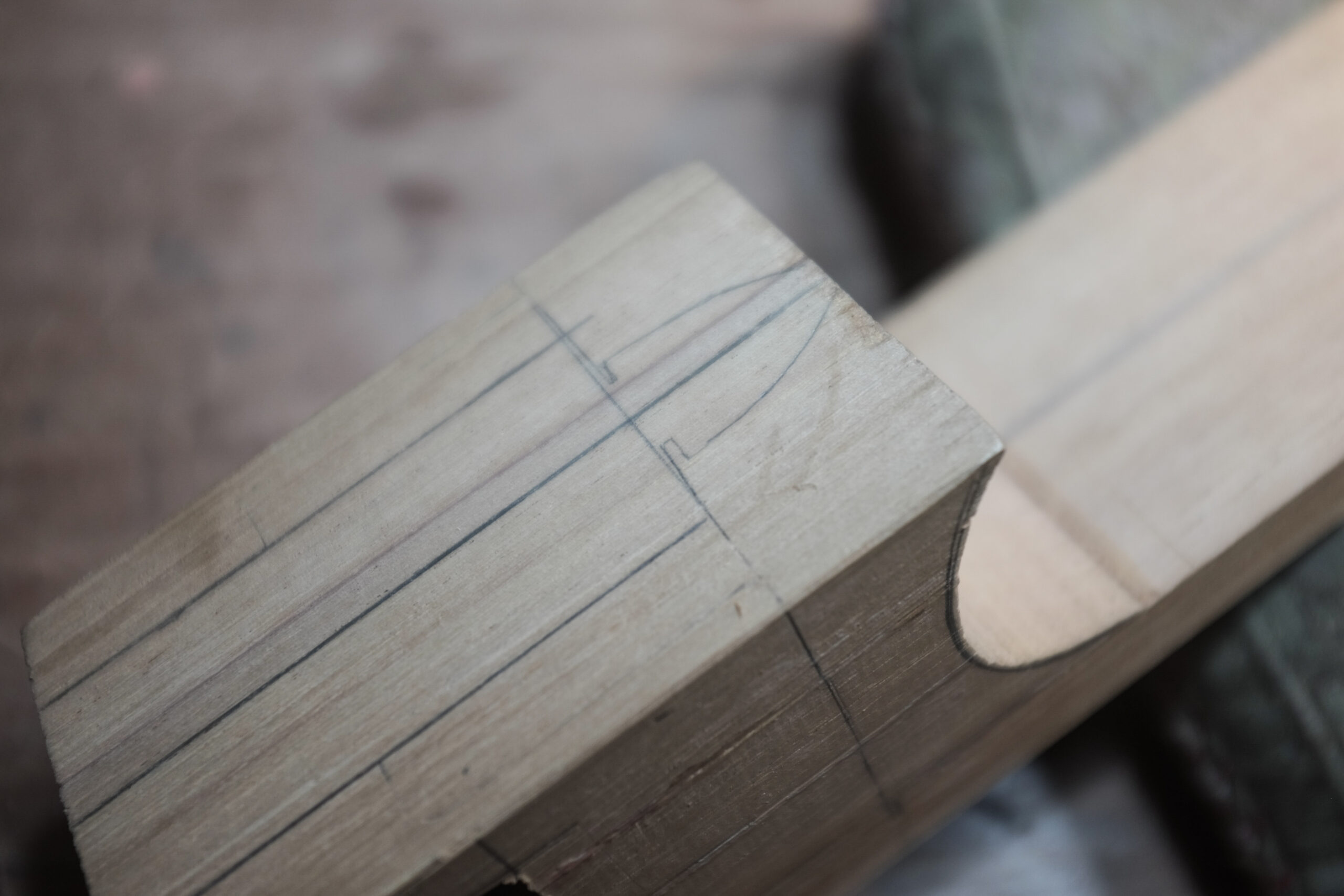
- I make both my Flamenco and Classical guitars on the same Solera Mould. Depending on what I’m working on I might shift the angle of the neck by adding very thin shims at the far end of the solera, sometimes in combination with how I shave down the fretboard. I generally shave the fretboard down over the lower strings to allow for the wider motion of those low wound strings. With a flamenco player the distance of the strings over the body becomes an important factor so a delicate conversation takes place between the neck & the fretboard.
- I radius my tops at 25’ and the backs at 15’
- I generally use a scale length of 650cm but have worked at other scales and can certainly create on instrument with one’s preferred scale length
- I have been using Evo Gold frets for a number of years now and really like working with them. They are quite hard. Harder than standard nickel silver frets, but not as hard as stainless steel. In between, I’d say. Now that Evo Gold frets are no longer made, I am shifting over to the Korean Rose Gold Bronze frets. My understanding as that they very similar in terms of hardness to Evo Gold, but with a slightly different colour. at the time of writing, I’ve yet to use them, but I have a feeling that I’m going to love them even more than the Evo, especially with the colour of them
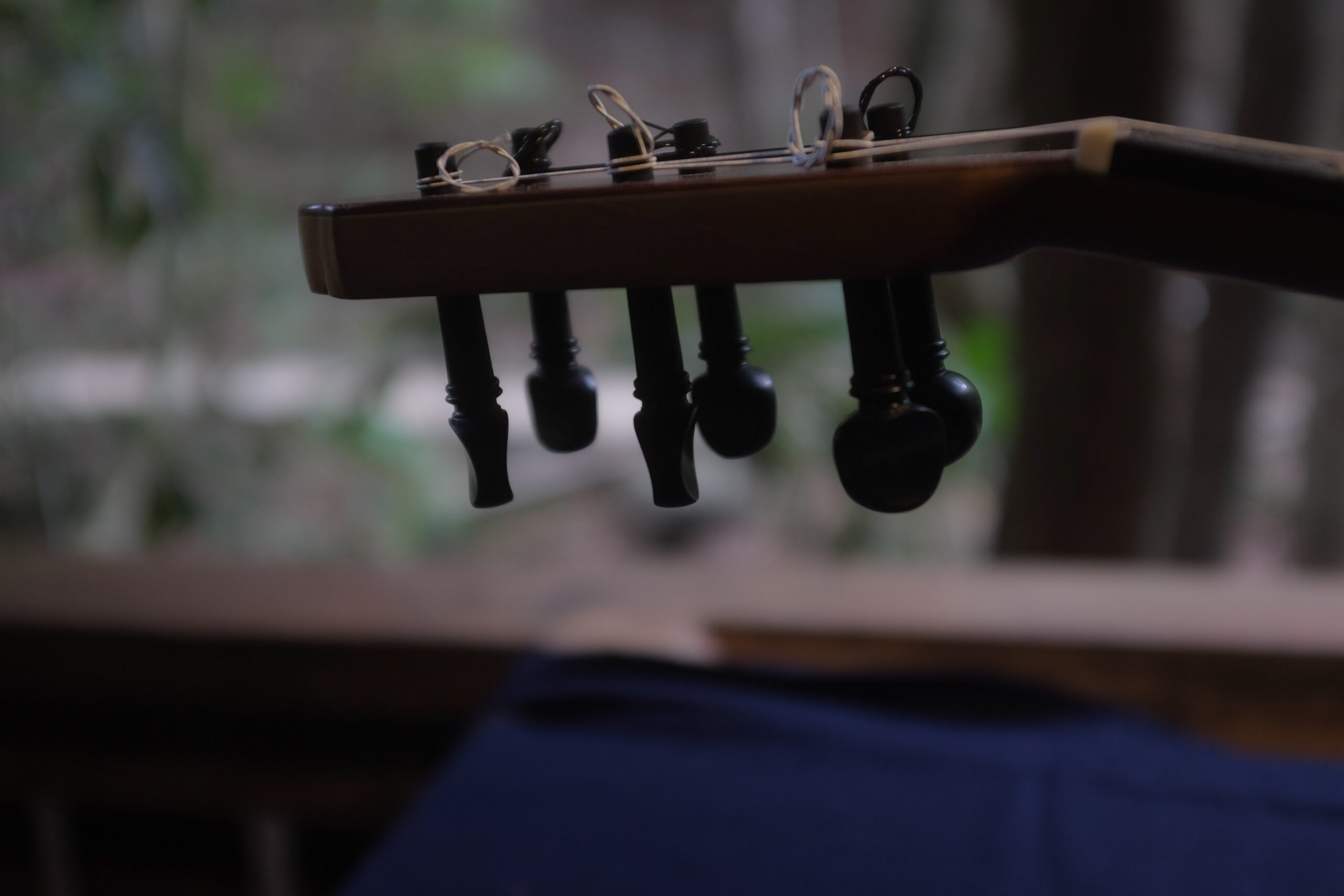
- When someone commissions an instrument there is a lot of scope for personal preferences in terms of neck width and thickness; string span at the nut and saddle; string action; rosette choice; soundport or not; how much relief along the fingerboard; and of course the wide range of woods and hardware that can be employed
- I have always worked on a flat fretboard, but am open to shaping the board to a preferred radius.
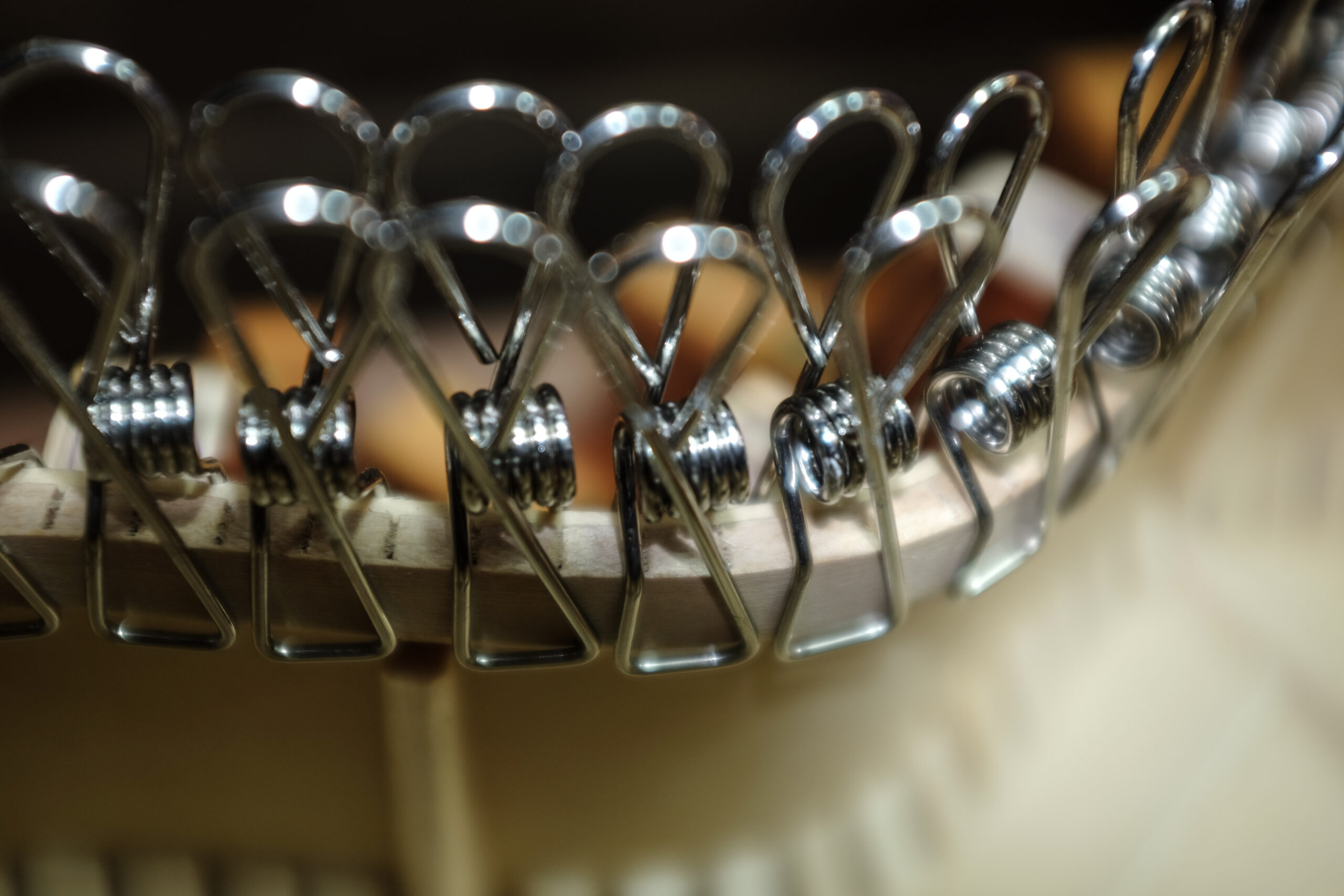
Thoughts on glues. What I wrote above about hot hide glue is spot on and I use it whenever I can and certainly for the bracing and most of the other elements in the inside of an instrument. There are times when I have used LMI yellow glue – an excellent adhesive though no longer available as far as I know and I’m cherishing the last bottle I have – on the inside kerfing that the back attaches to in a guitar. Much depends in temperature. If I’m working in the cold season here sometimes there’s just not enough time to work certain aspects of an instrument with hot hide glue. Believe it or not, where I live up in the mountains at 1000m to the east of Chiang Mai cgan get down to 5 degrees C!
So I use the LMI glue for certain parts, including on the rosettes where I also use CA glue (‘super’ glue) extensively
I’m currently on the hunt for a glue to replace the LMI stuff. I’m hearing good things about Titebond extend on the forums.
