Classical
Crafted with focus and care, from my hands to yours.
Section 1: The Spanish Heel (Structural Integrity)
The Spanish Heel: An Unbroken Tonal Chain
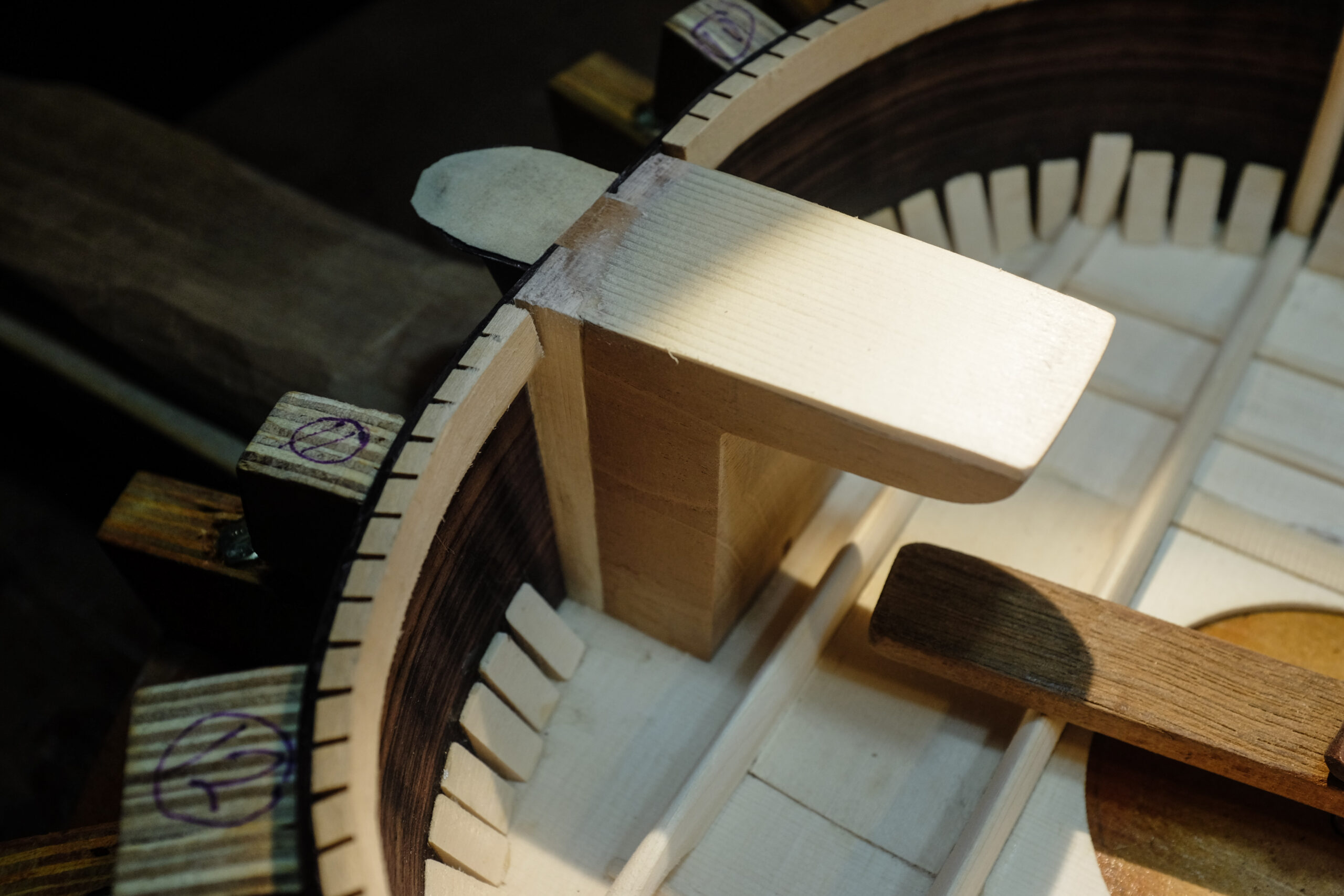
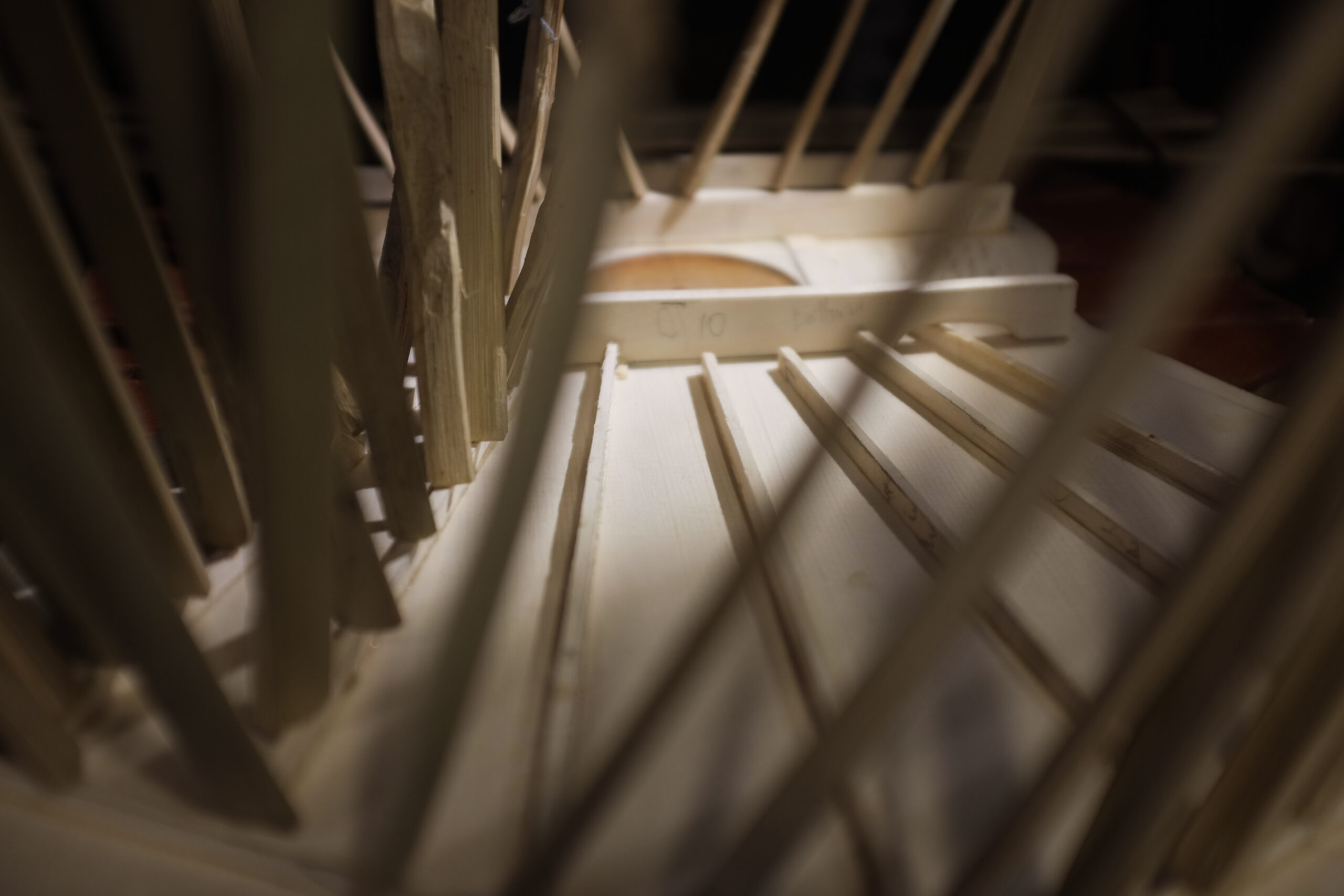
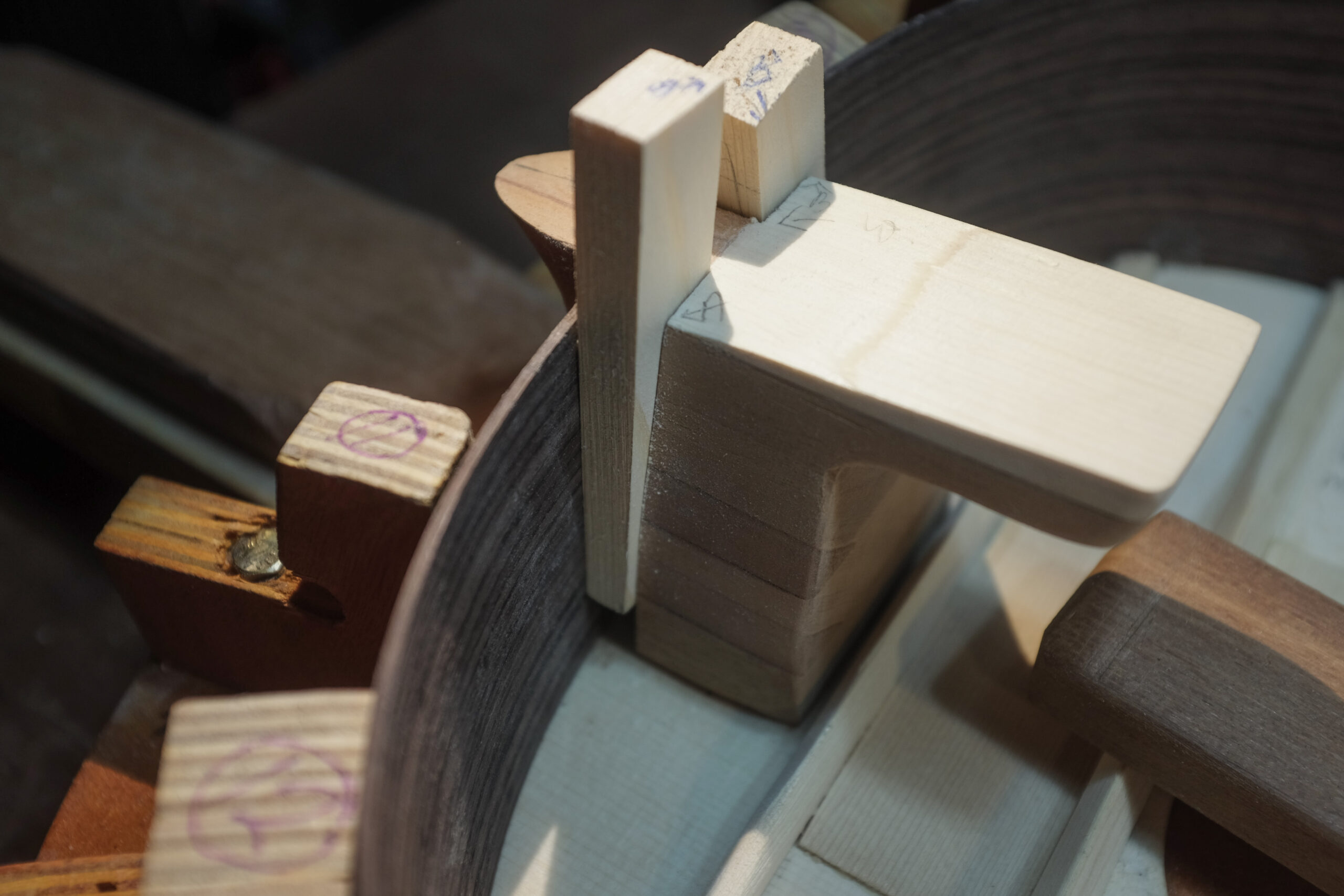
In traditional luthiery, the Spanish heel is a time-honoured and traditional expression of structural and acoustic unity. Instead of building the body separately and attaching the neck at the very end with bolts or a joint, the neck and the internal headblock are structured by laminating and gluing wood to create a single, continuous piece of timber. The sides of the guitar are then slotted directly into the neck itself.
When I add the sides I glue the sides in and use wedges to bring those sides tight into the heel structure. I picked this up from such great luthiers as José Romanillos and Pablo Requena. It creates a wonderfully solid structure that is then completely locked in when the back is glued on.
This construction method creates a completely seamless, rigid kinetic bridge between the neck and the body. By eliminating mechanical joints, string vibrations are allowed to pass completely unhindered down the entire length of the instrument, resulting in unparalleled sustain, immediate responsiveness, and exceptional structural stability over the guitar’s lifetime.
🧪 Section 2: Organic Chemistry
Hot Hide Glue: The Invisible Resonance
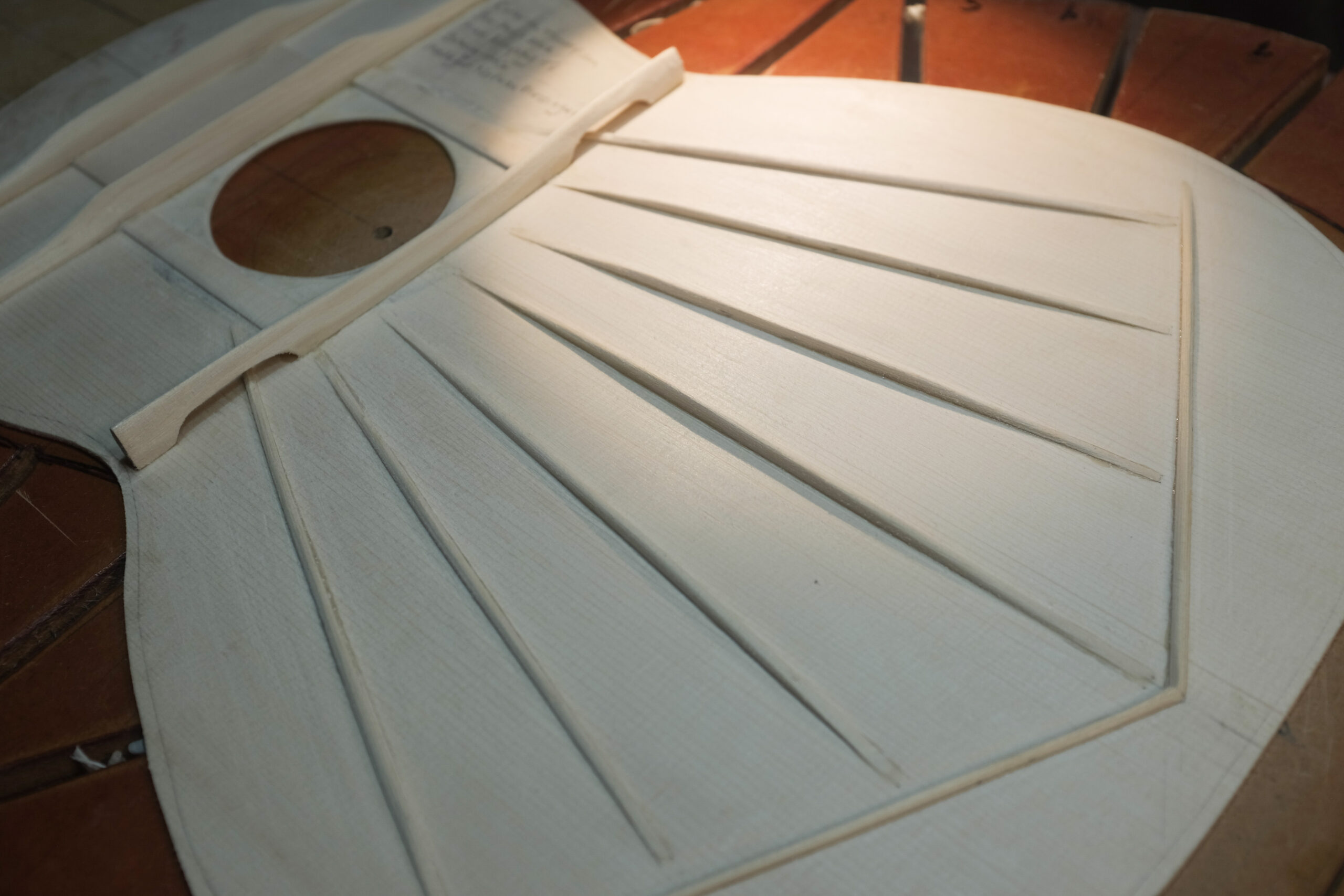
Every critical structural joint inside my workshop is bound using traditional hot hide glue granules. This means that all my internal gluing is done with this glue.
Unlike standard modern synthetic PVAs and aliphatic wood glues—which dry into a tiny, microscopically soft, rubbery plastic barrier that dampens high frequencies—hide glue behaves completely differently.
As it cools and cures, hide glue crystallizes into a glass-hard, resinous glass-like bond that actually mirrors the cell structure of the wood itself. It fuses the timber interfaces together, ensuring that your instrument vibrates as a singular, harmonious acoustic unit rather than a collection of glued parts. Furthermore, it remains fully reversible, allowing the instrument to be safely serviced by future generations of luthiers.
I do use other types of glue in my construction such as PVA and CA in certain parts where it seems reasonable. I make sure that all the internal components are HHG though.
🌲 Section 3: The Soundboard – Quarter-Sawn Engelmann Spruce
Meticulous Materiality: Quarter-Sawn Perfection
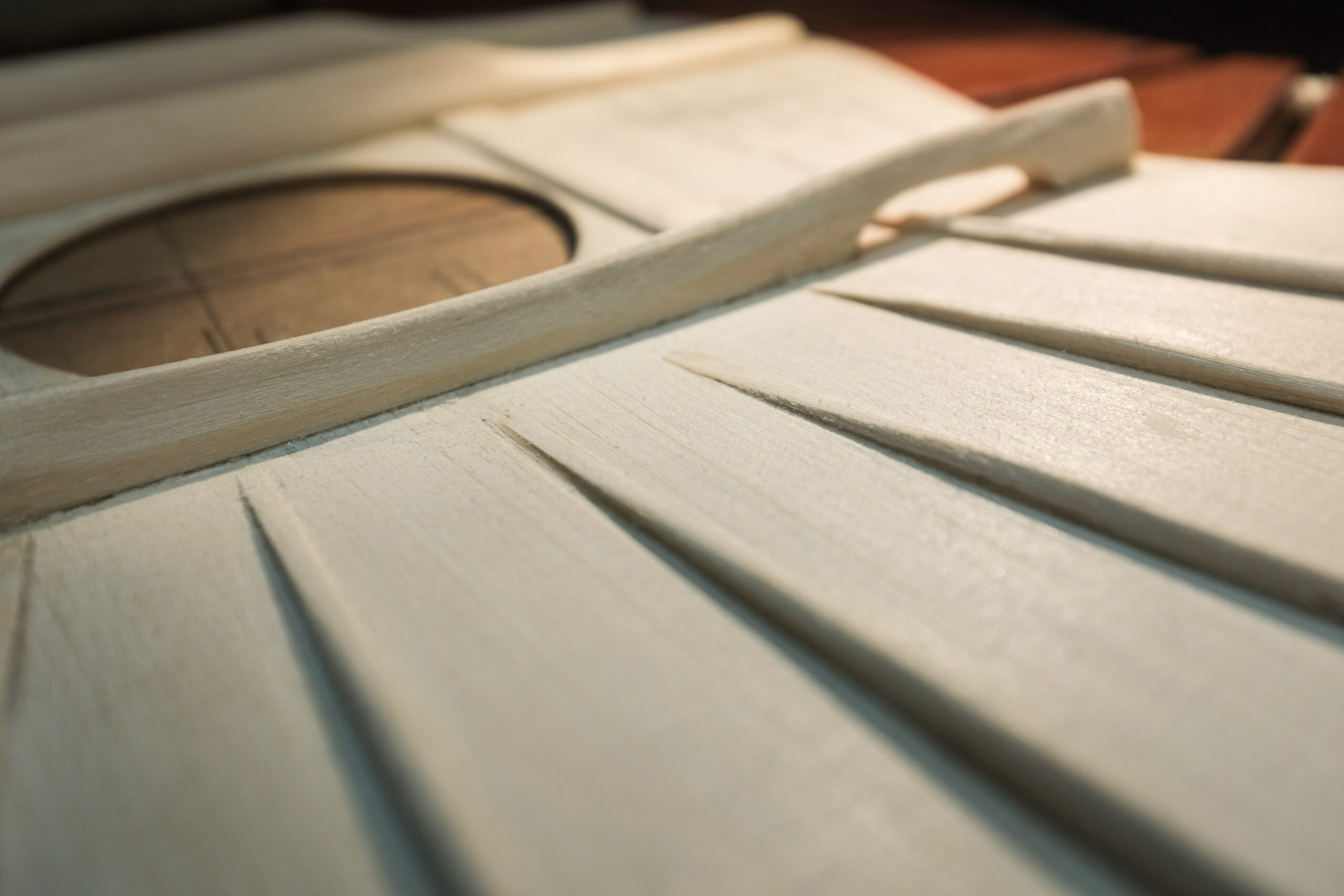
The soundboard is the true lung of the guitar. To achieve an expansive, blooming dynamic range, I select only premium quarter-sawn Engelmann Spruce tops. True quarter-sawing ensures that the growth rings run absolutely perpendicular to the face of the top, providing maximum structural stiffness along the grain while allowing the soundboard to remain exceptionally lightweight and thin.
This meticulous orientation enables the top to flex effortlessly under the lightest string attack, producing complex, shimmering overtones, a lightning-fast response, and an incredibly balanced projection across all six strings.
It is an interesting statement I’ve just made. I mention Engelmann Spruce and, in truth, it is the wood that I use for almost all my tops. Accessed from Alaska and B.C. It’s what I love to work with and over the years I have developed a good sense of the wood. I did make one Flamenco with an Alaskan Yellow Cedar top. It was a while ago and, if I remember correctly, I nicknamed that guitar, The Ferrari. It was very fast and snappy. That all being said, I am thinking that I will be moving into cedars and other top woods in the near future
Into the Nitty Gritty
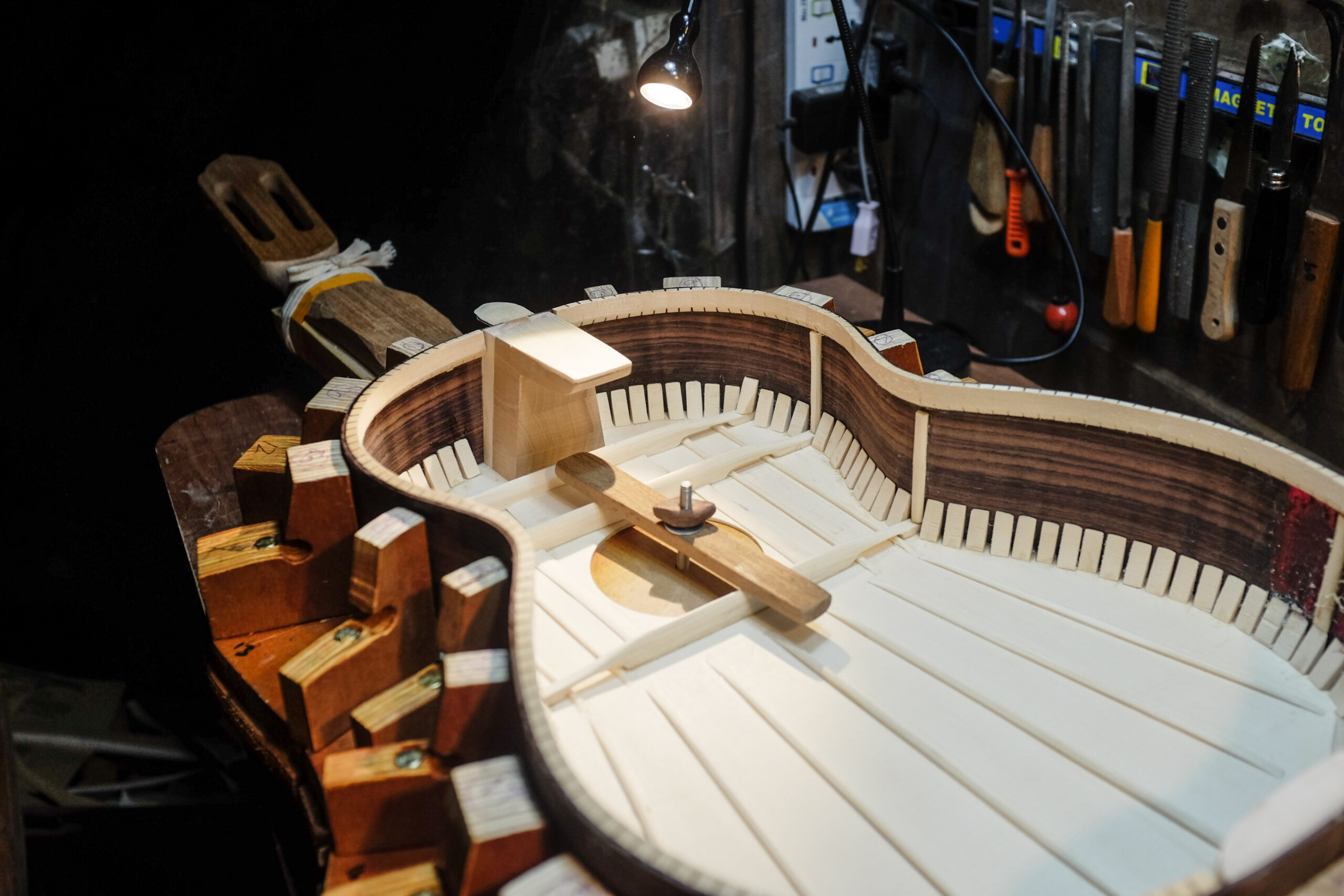
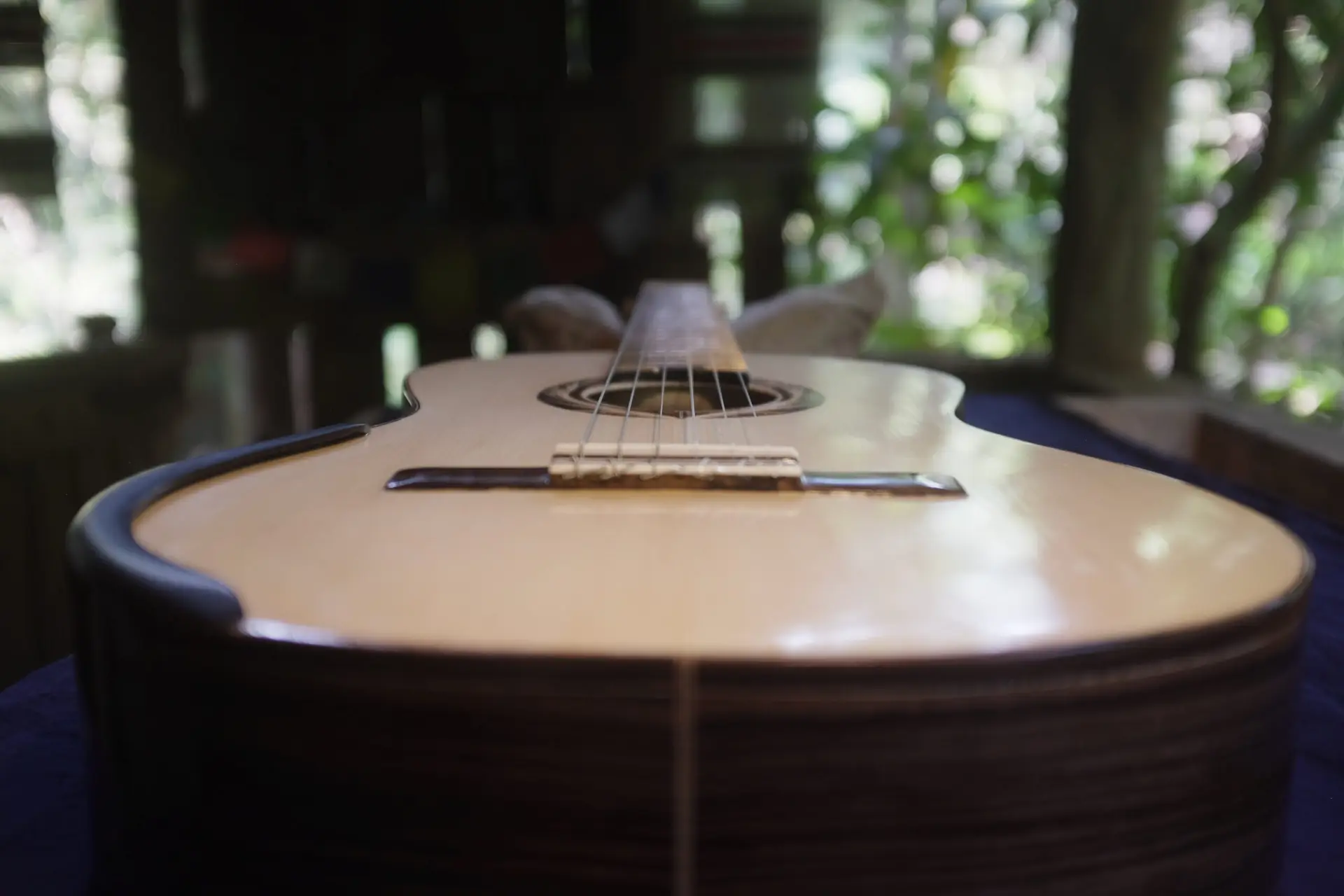
- I make both my Flamenco and Classical guitars on the same Solera Mould. Depending on what I’m working on I might shift the angle of the neck by adding very thin shims at the far end of the solera, sometimes in combination with how I shave down the fretboard. I generally shave the fretboard down over the lower strings to allow for the wider motion of those low wound strings. With a flamenco player the distance of the strings over the body becomes an important factor so a delicate conversation takes place between the neck & the fretboard.
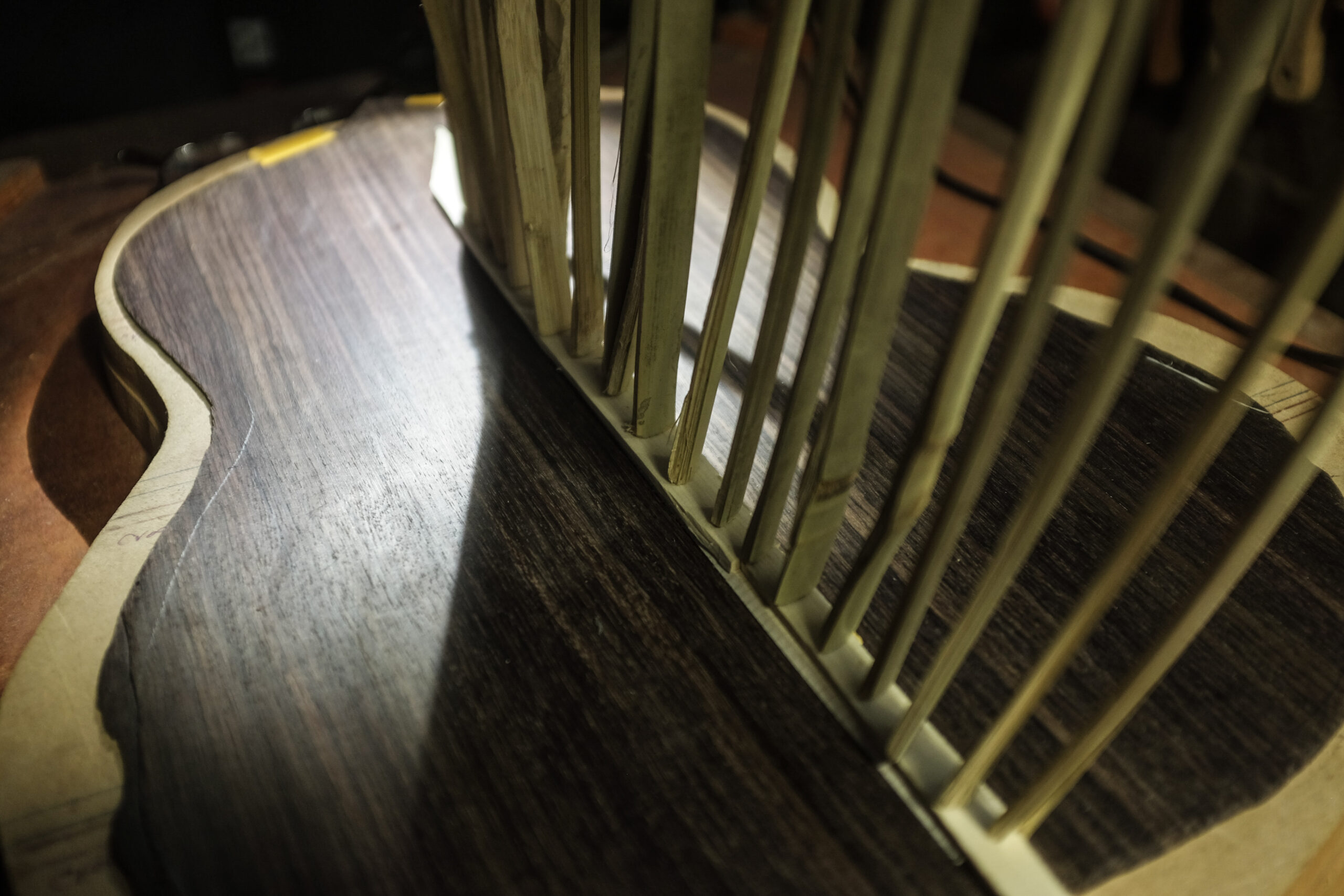
- I radius my tops at 25’ and the backs at 15’
- I generally use a scale length of 650cm but have worked at other scales and can certainly create on instrument with one’s preferred scale length
- I have been using Evo Gold frets for a number of years now and really like working with them. They are quite hard. Harder than standard nickel silver frets, but not as hard as stainless steel. In between, I’d say. Now that Evo Gold frets are no longer made, I am shifting over to the Korean Rose Gold Bronze frets. My understanding as that they very similar in terms of hardness to Evo Gold, but with a slightly different colour. at the time of writing, I’ve yet to use them, but I have a feeling that I’m going to love them even more than the Evo, especially with the colour of them
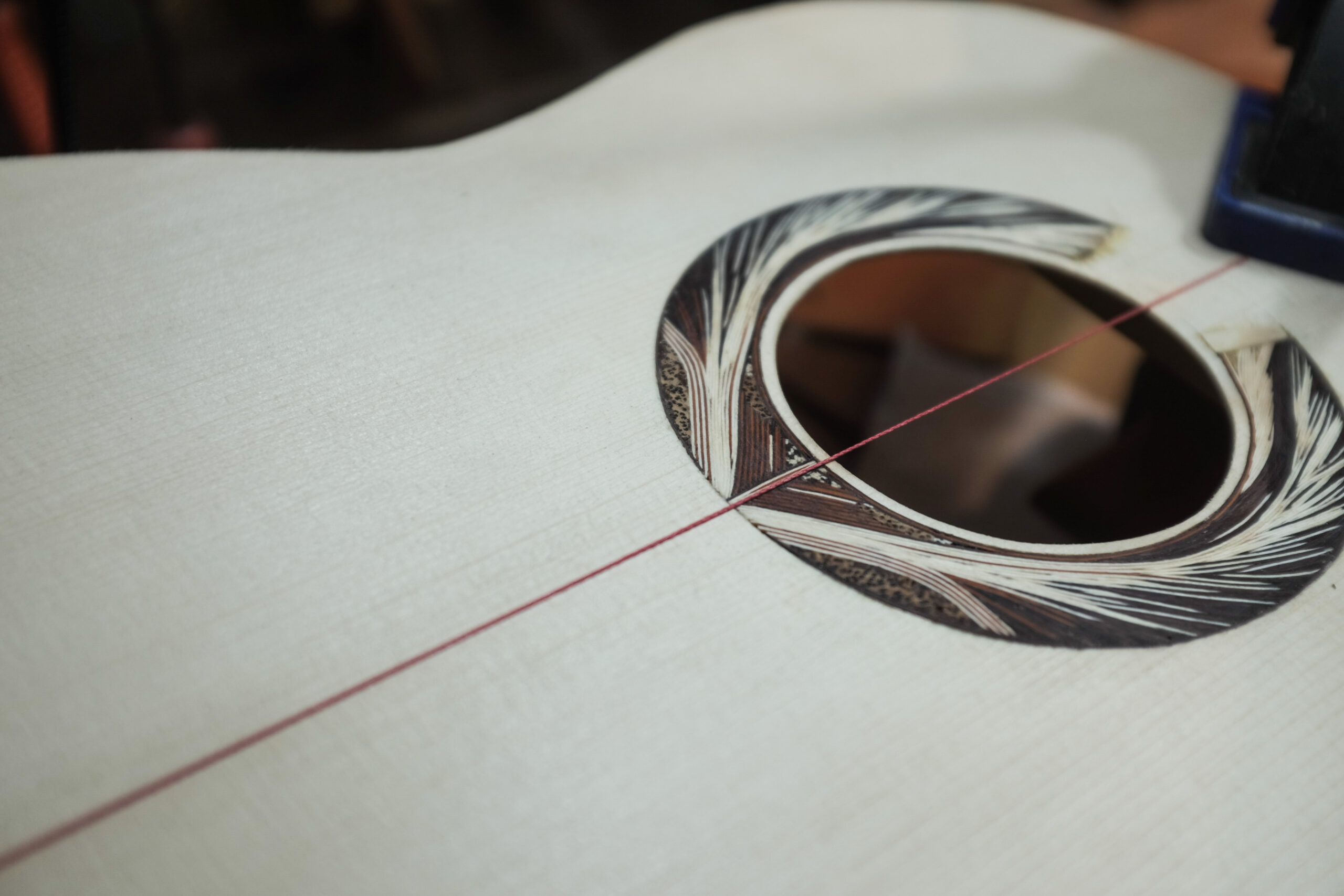
- When someone commissions an instrument there is a lot of scope for personal preferences in terms of neck width and thickness; string span at the nut and saddle; string action; rosette choice; soundport or not; how much relief along the fingerboard; and of course the wide range of woods and hardware that can be employed
- I have always worked on a flat fretboard, but am open to shaping the board to a preferred radius.
Thoughts on glues. What I wrote above about hot hide glue is spot on and I use it whenever I can and certainly for the bracing and most of the other elements in the inside of an instrument. There are times when I have used LMI yellow glue – an excellent adhesive though no longer available as far as I know and I’m cherishing the last bottle I have – on the inside kerfing that the back attaches to in a guitar. Much depends in temperature. If I’m working in the cold season here sometimes there’s just not enough time to work certain aspects of an instrument with hot hide glue. Believe it or not, where I live up in the mountains at 1000m to the east of Chiang Mai cgan get down to 5 degrees C!
So I use the LMI glue for certain parts, including on the rosettes where I also use CA glue (‘super’ glue) extensively
I’m currently on the hunt for a glue to replace the LMI stuff. I’m hearing good things about Titebond extend on the forums.