Irish Bouzouki
Photos/Video below:
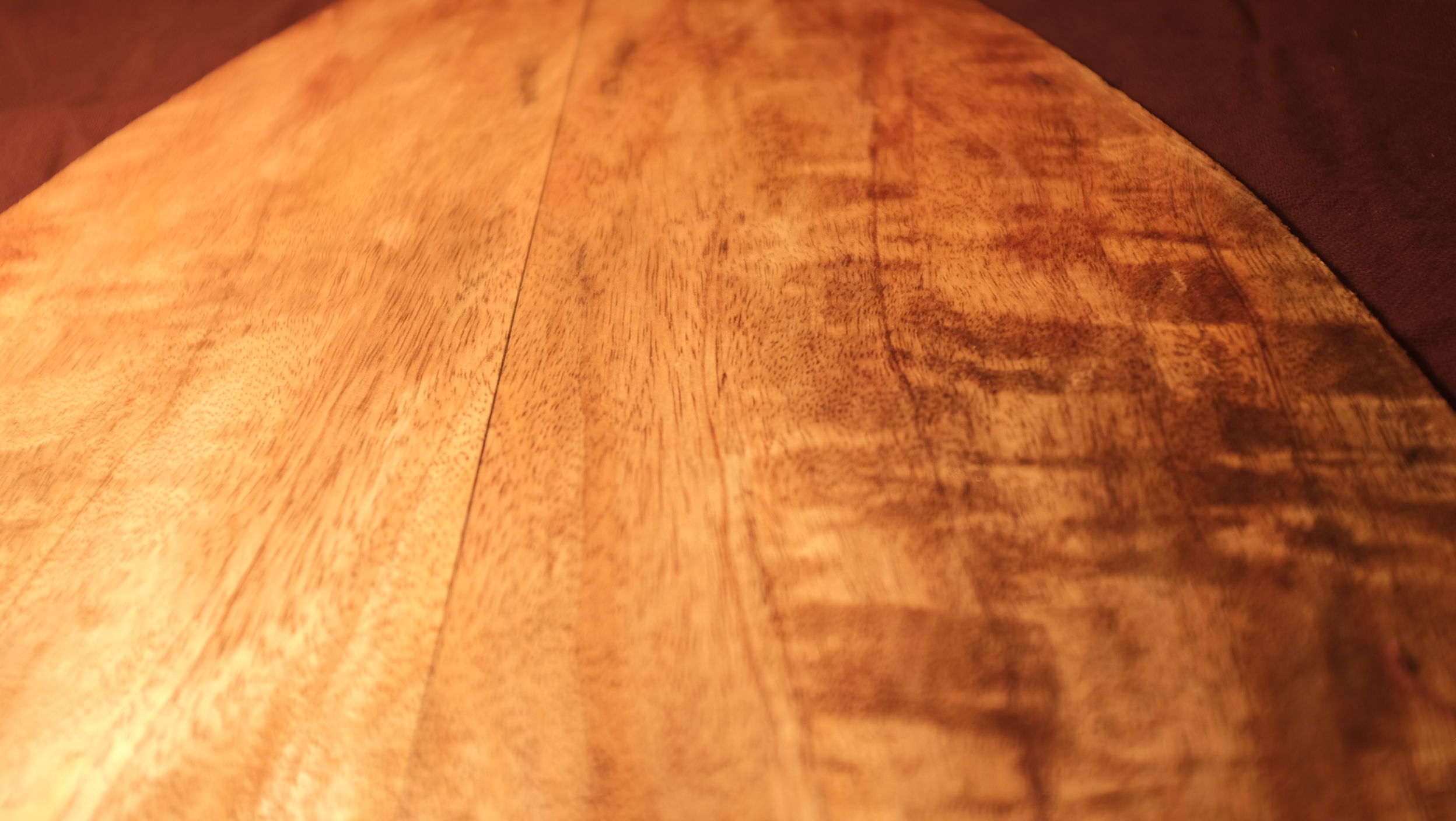
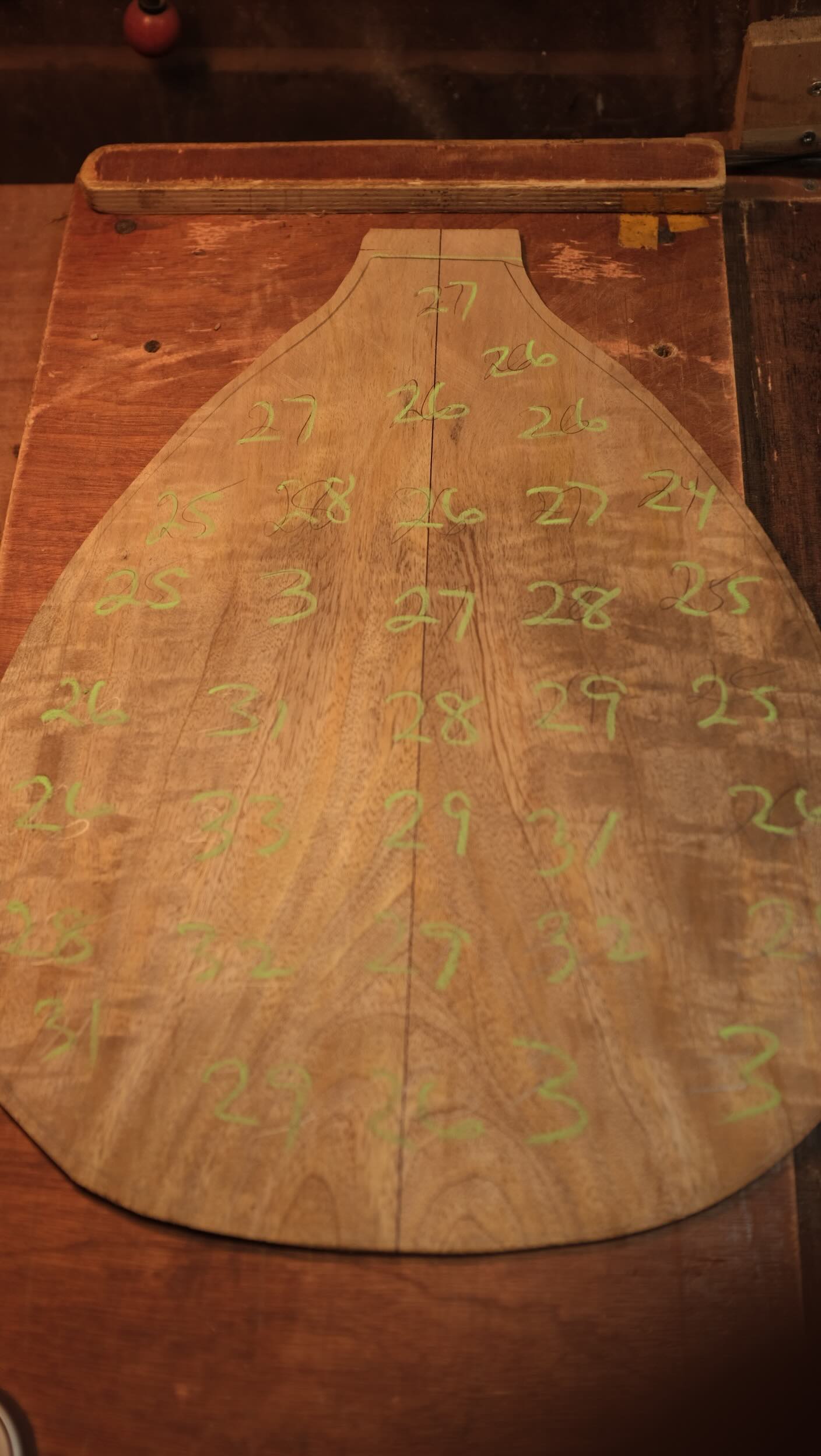
Scraping down the last mm of a Figured Mango Irish Bouzouki back.
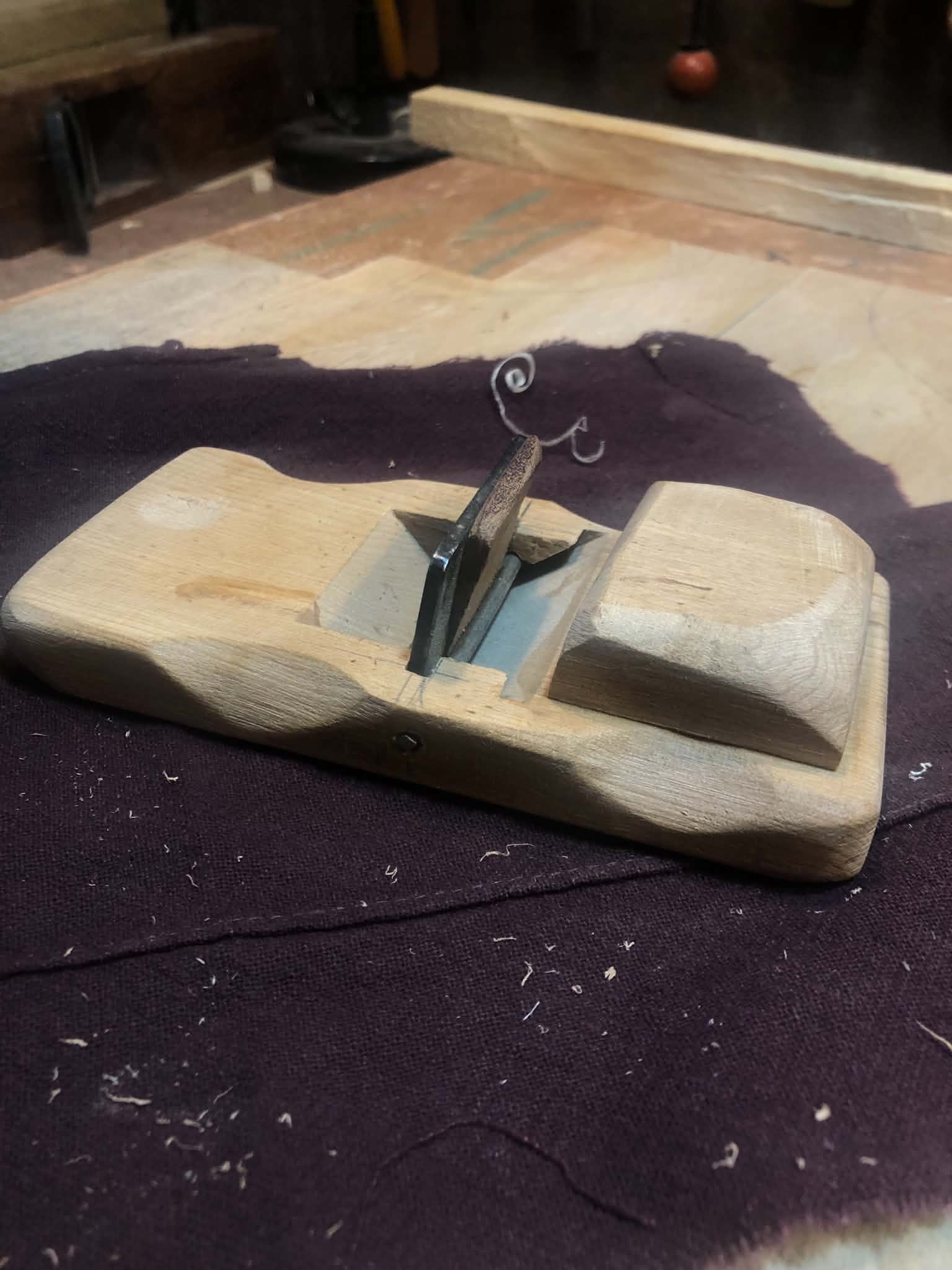
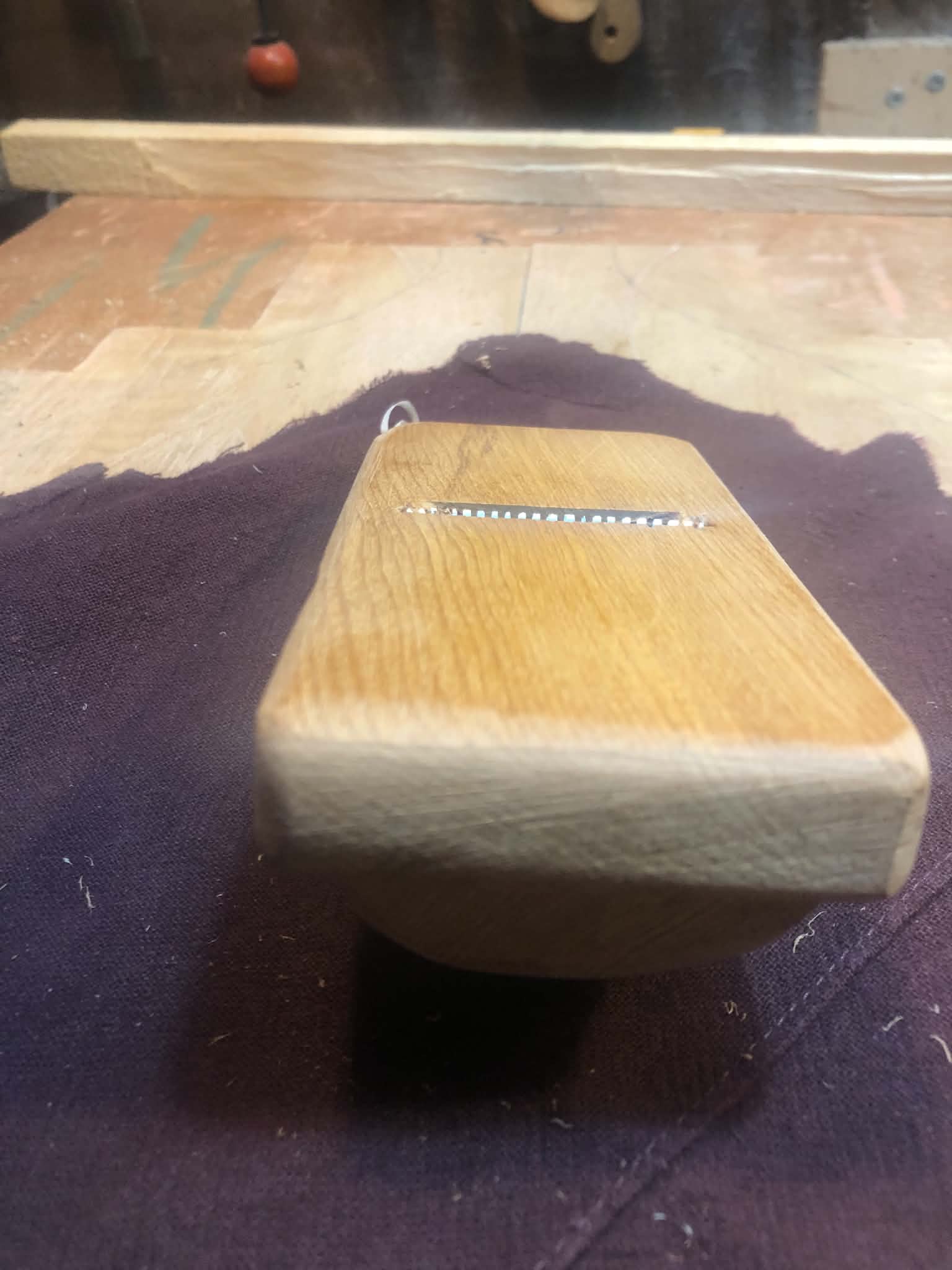
Below that a toothing plane (from an old Japanese plane) that I made for this project.
I am thrilled to share a new chapter in my luthiery journey. Moving beyond the classical and flamenco traditions, I am currently handcrafting my very first Irish Bouzouki.
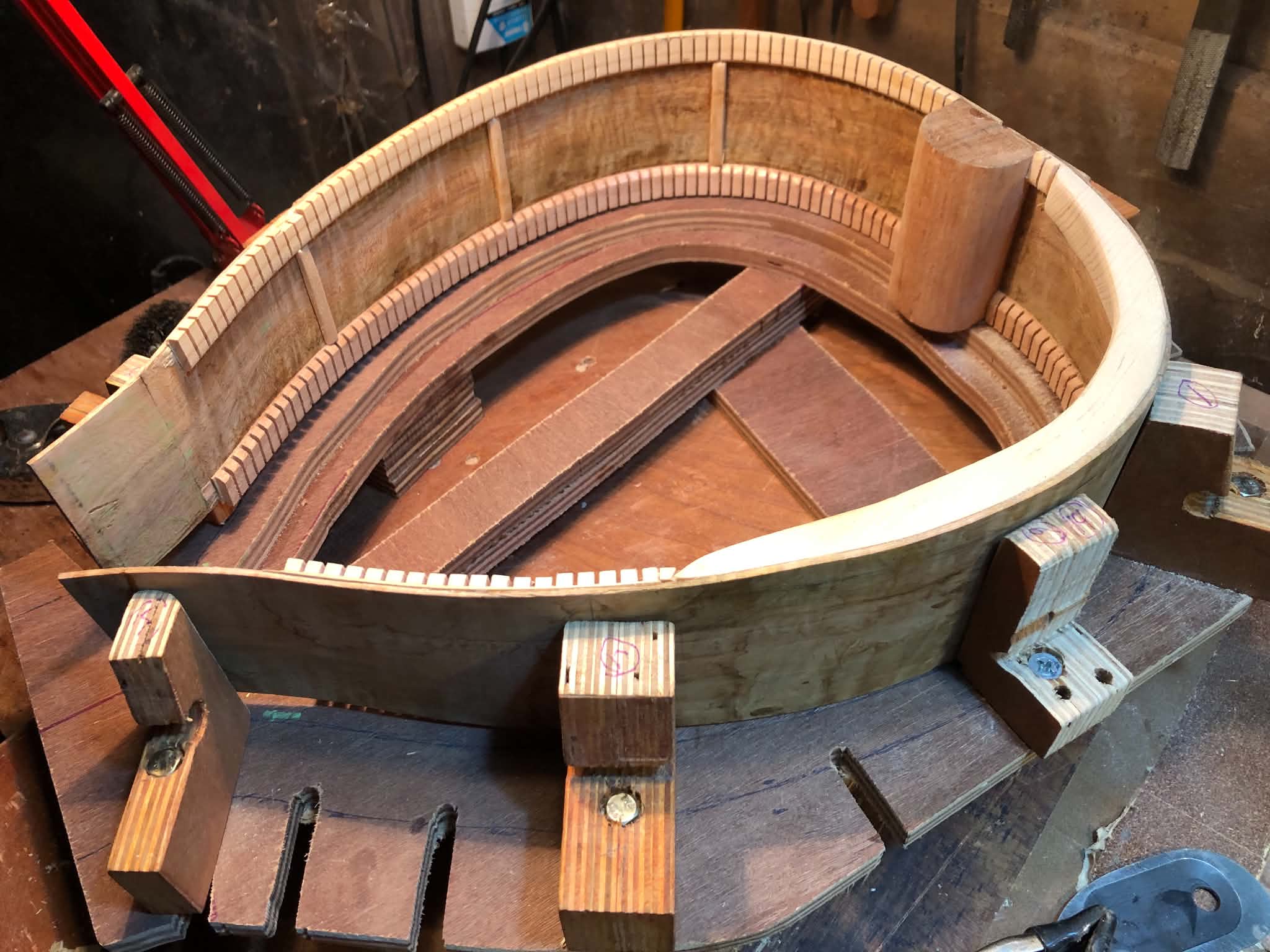
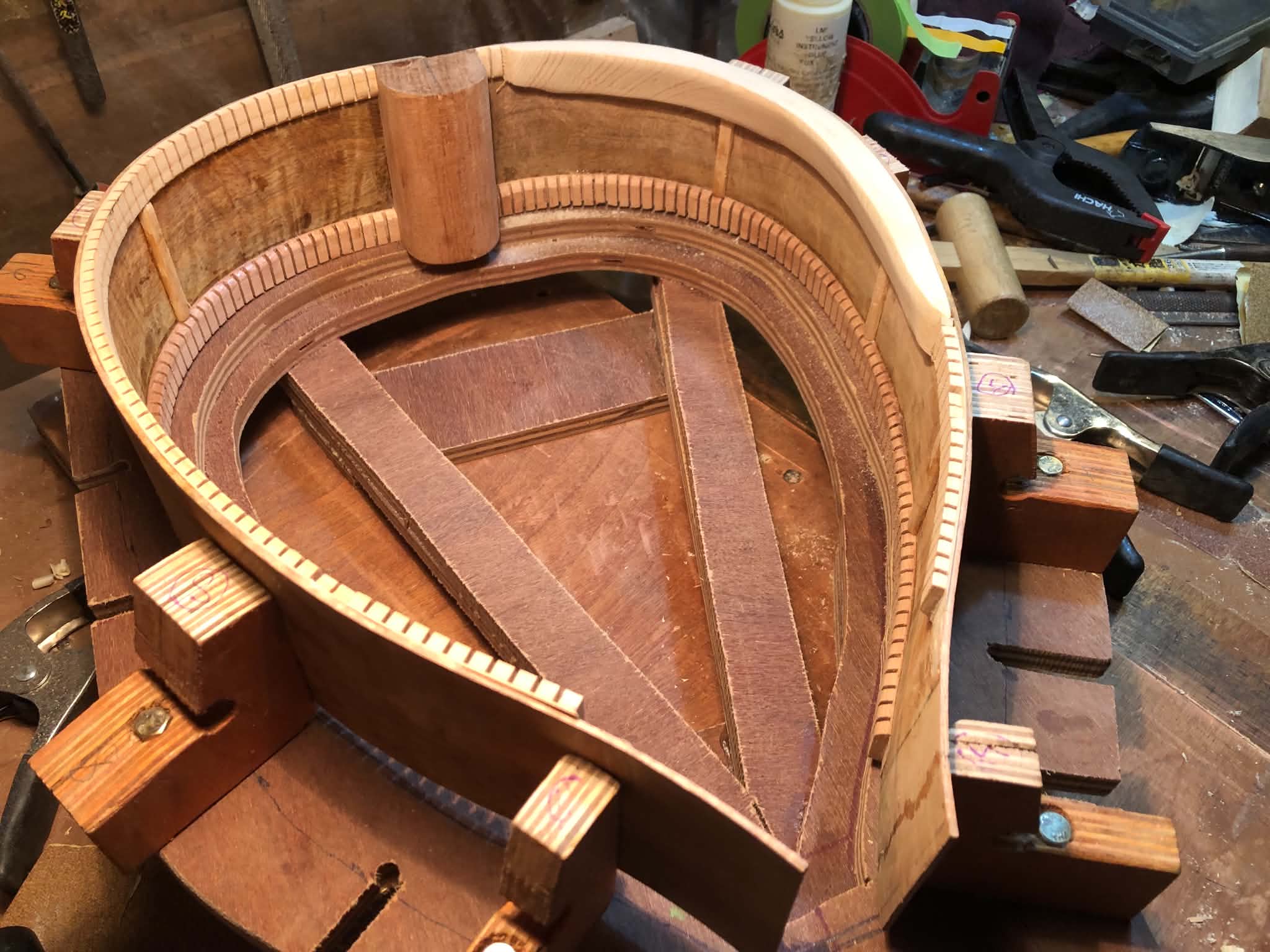
Nov. 8 ’26
I thought I’d write a bit on some plans and details on this Irish Bouzouki I’m currently making. I’ve decided to go with a bolt-on neck system for a couple of reasons. One of those reasons is that it allows relatively simple neck adjustments that might be needed in the future, but a big part of my doing this is to try something completely different from my usual building techniques. I usually work on a Solera using the somewhat traditional spanish heel.
I’ve decided to add a Grit Laskin style armrest. First time I’ve ever done this too. Another learning opportunity. In terms of finish, I’ll be doing my usual French Polish on the top, back and sides, and the headplate, but for the mahogany neck will use the Tried and True Linseed Oil/ Beeswax finish and will not pore fill. For the back and sides I’m going to use a West System Epoxy for the pore fill. Again all new stuff for me here. I’ll also use the Tried and True on the armrest, which will be the same Figured Mango I am using for the back and sides.
With the neck I’m going to add an adjustable truss rod with two carbon fiber support rods on either side of that truss rod. Another first for me.
That’s enough for now. I’m sure I’ll have more updates soon enough. Cheers! Cat
Nov, 1 2026 – Samhain
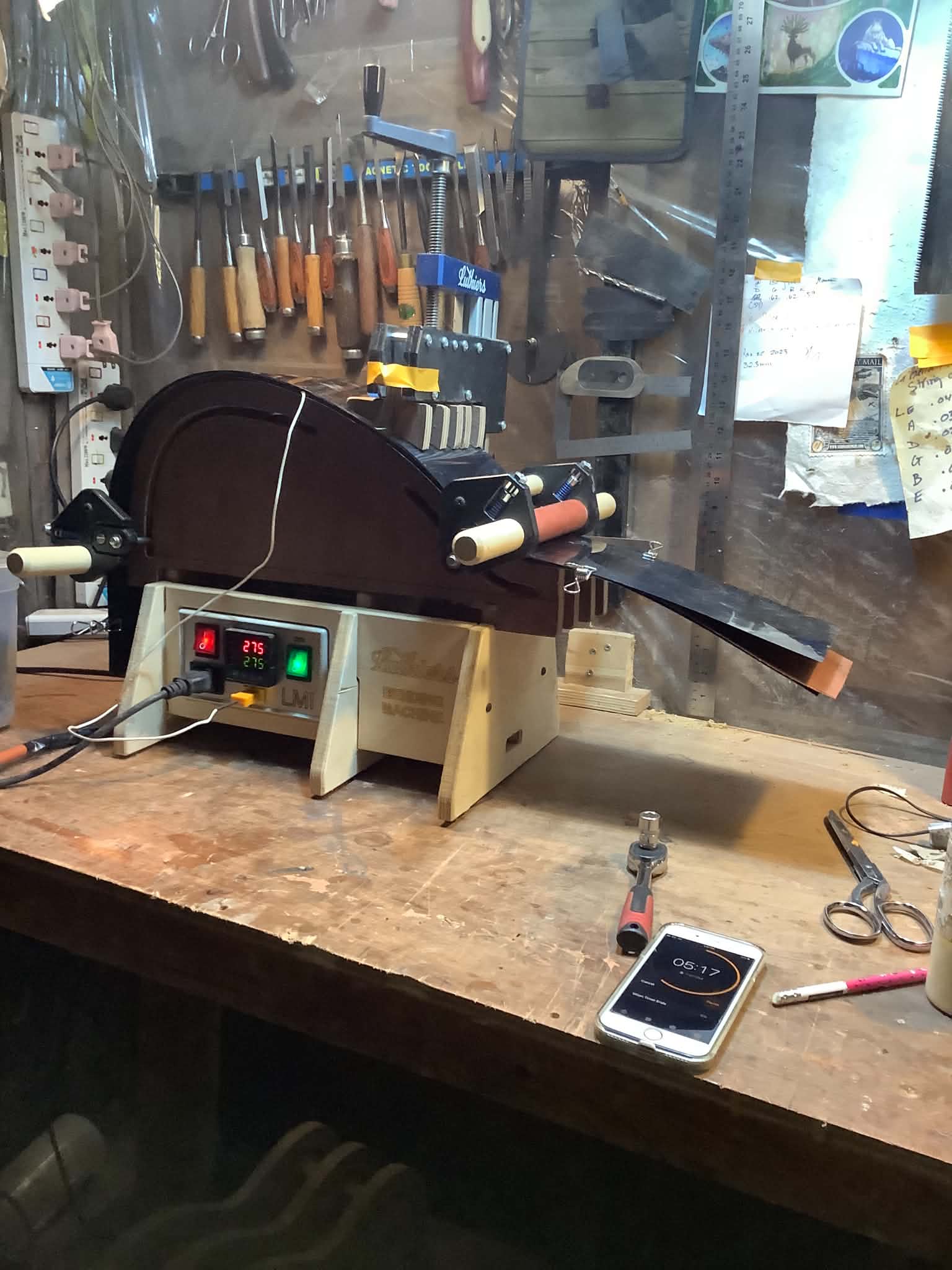
Side bending day in the shop! I was going to to a trad bending on my butane powered bending pipe but decided that the wild grain of the spalted figured mango would be better worked in my LMI bending machine. No cracking! No explosions!
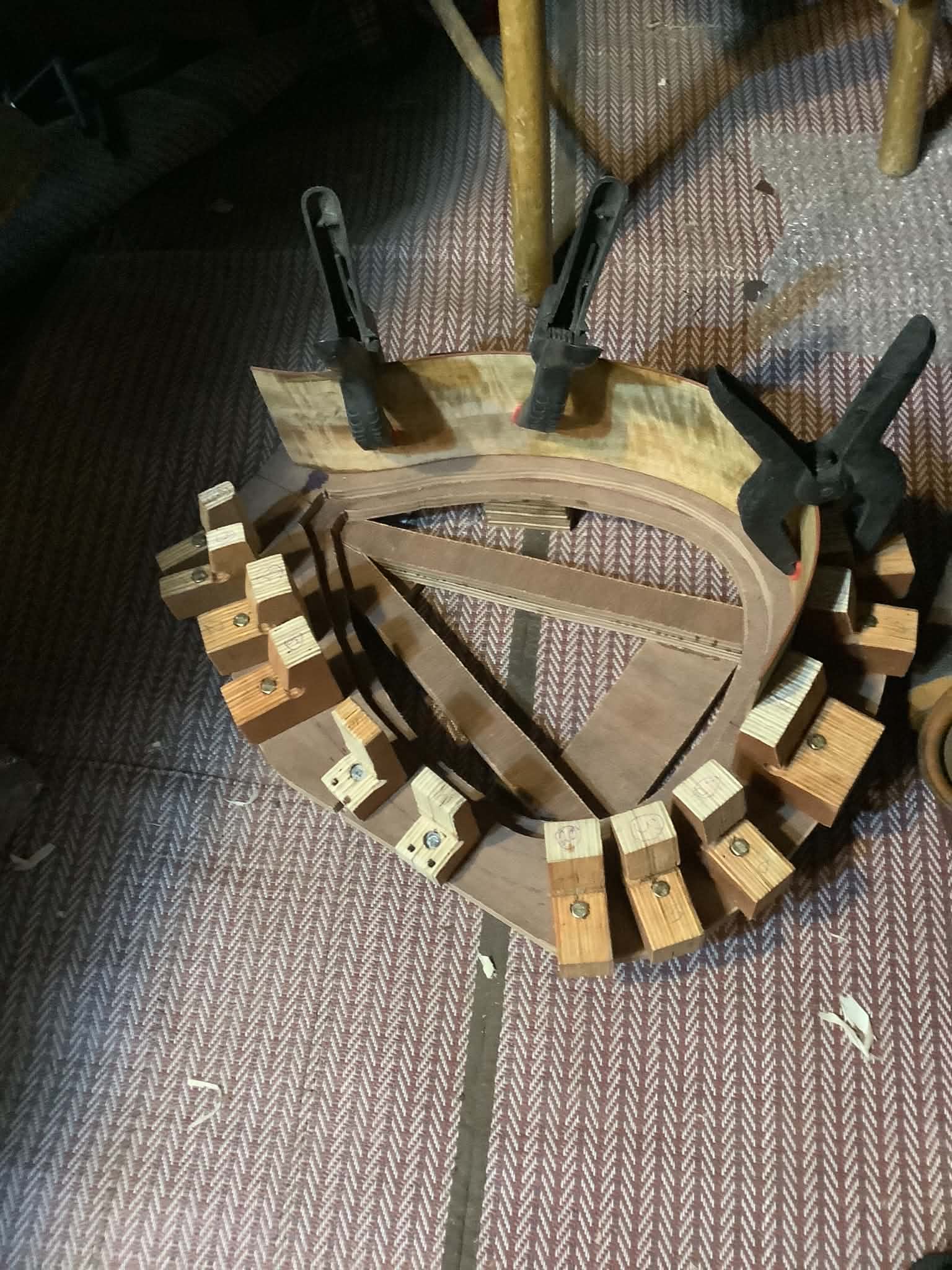
Into the Nitty Gritty
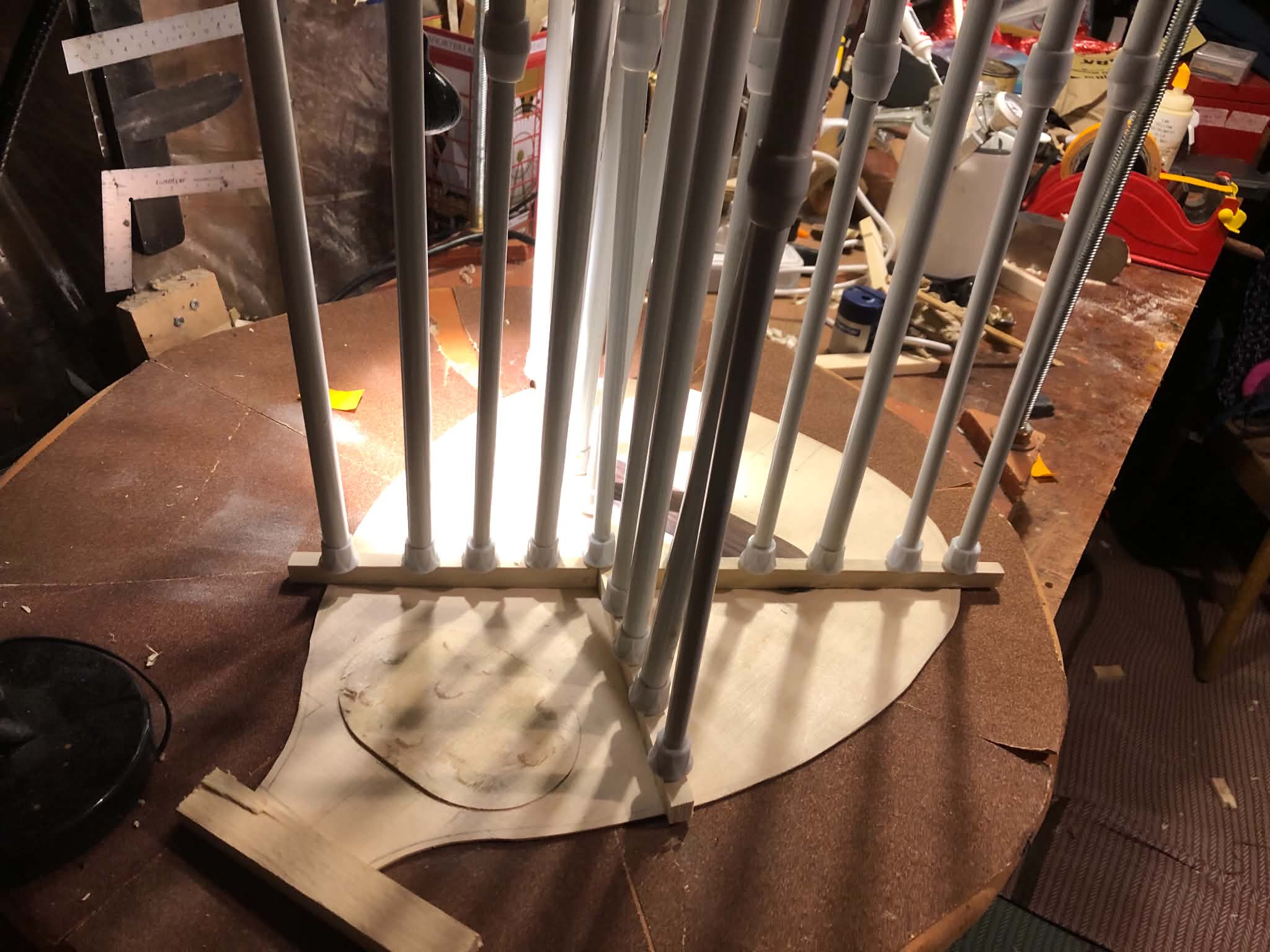
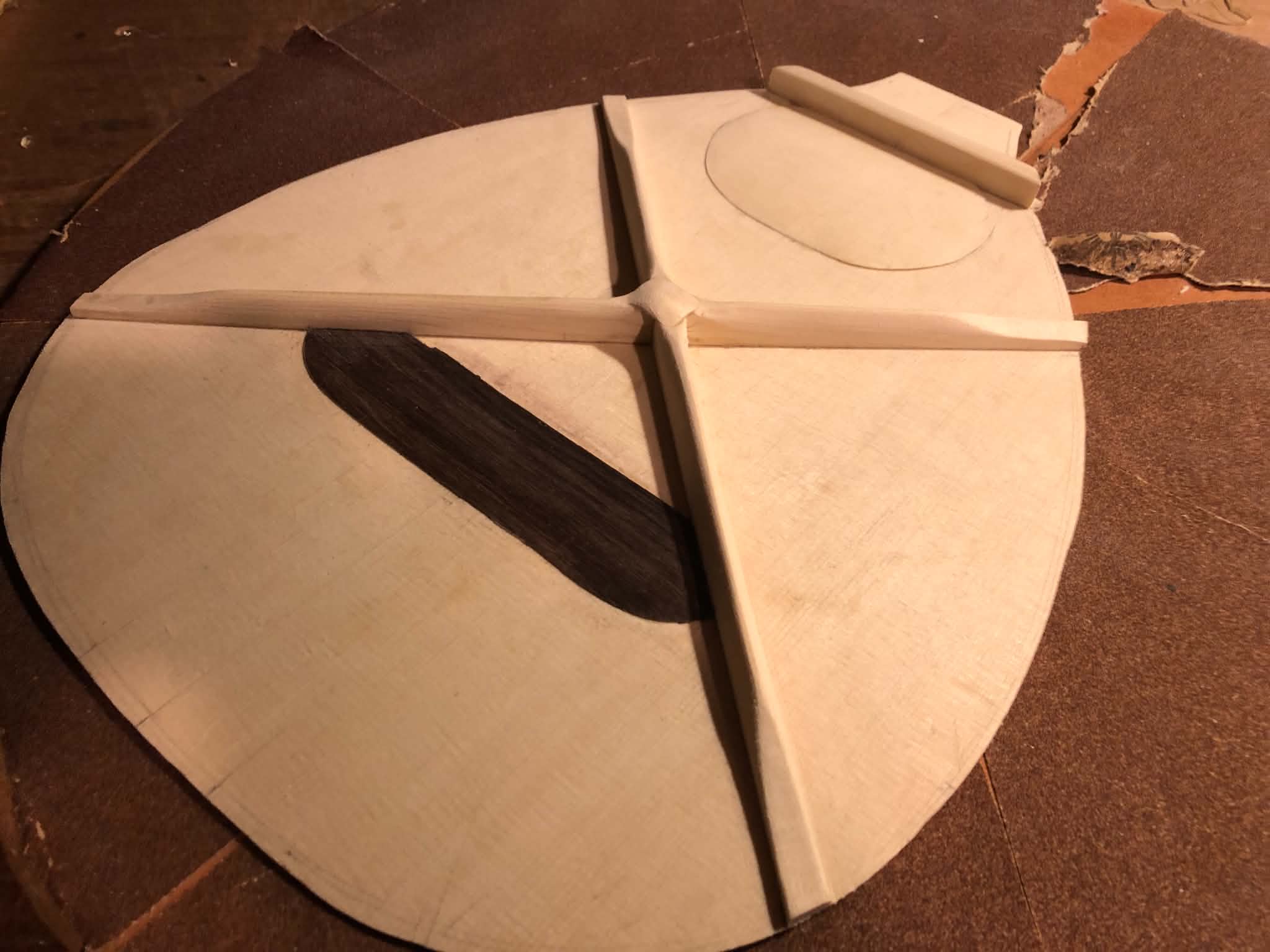
- I make both my Flamenco and Classical guitars on the same Solera Mould. Depending on what I’m working on I might shift the angle of the neck by adding very thin shims at the far end of the solera. With the Irish Bouzouki I’m working in a very different mode. Body made separately from the neck. Rather than everything being all one piece I am working with a bolt-on neck on this one. A few reasons for this, a big one being the ability to fairly easily shift the neck angle if ever needed down the road.
- With this instrument the radius of the top is at 15’ and the back at 12’
- I generally use a scale length of 650cm on my guitars and I am using the same scale length on this Bouzouki as well.
- I have been using Evo Gold frets for a number of years now and really like working with them. They are quite hard. Harder than standard nickel silver frets, but not as hard as stainless steel. In between, I’d say. Now that Evo Gold frets are no longer made, I am shifting over to the Korean Rose Gold Bronze frets. My understanding as that they very similar in terms of hardness to Evo Gold, but with a slightly different colour. at the time of writing, I’ve yet to use them, but I have a feeling that I’m going to love them even more than the Evo, especially with the colour of them
- When someone commissions an instrument there is a lot of scope for personal preferences in terms of neck width and thickness; string span at the nut and saddle; string action; rosette choice; soundport or not; how much relief along the fingerboard; and of course the wide range of woods and hardware that can be employed
- I have always worked on a flat fretboard on my flamencos and classicals and for this instrument am doing the same. I am open to shaping the board to a preferred radius of future instruments
Thoughts on glues. What I wrote above about hot hide glue is spot on and I use it whenever I can and certainly for the bracing and most of the other elements in the inside of an instrument. There are times when I have used LMI yellow glue – an excellent adhesive though no longer available as far as I know and I’m cherishing the last bottle I have – on the inside kerfing that the back attaches to in a guitar. Much depends in temperature. If I’m working in the cold season here sometimes there’s just not enough time to work certain aspects of an instrument with hot hide glue. Believe it or not, where I live up in the mountains at 1000m to the east of Chiang Mai cgan get down to 5 degrees C!
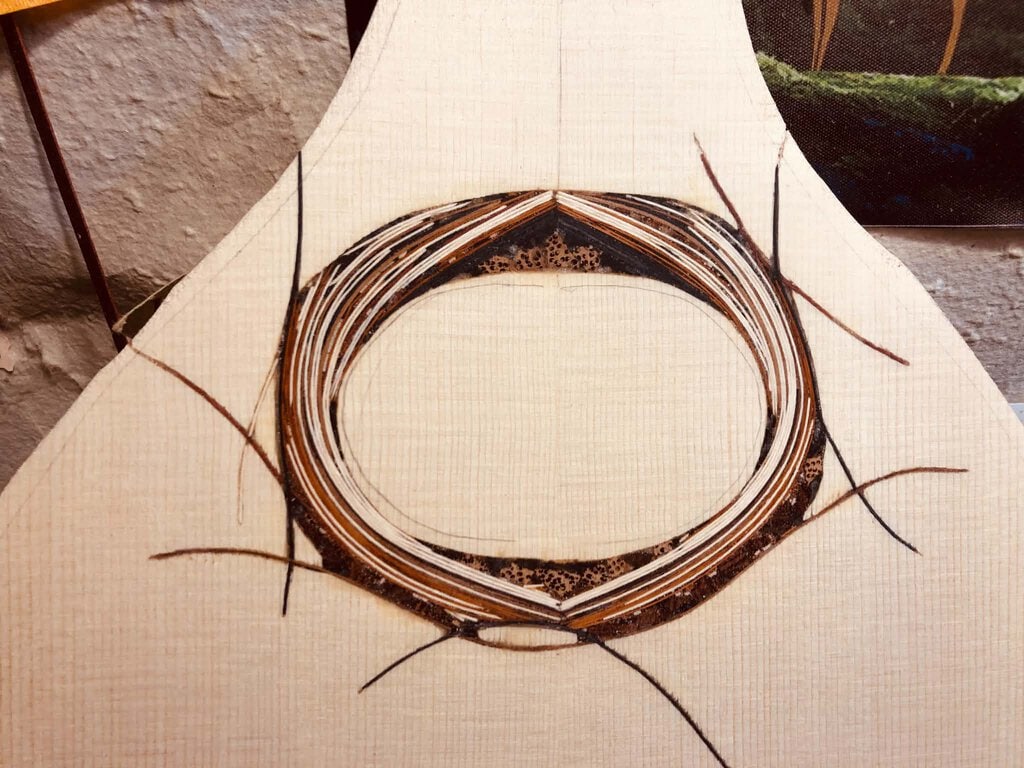
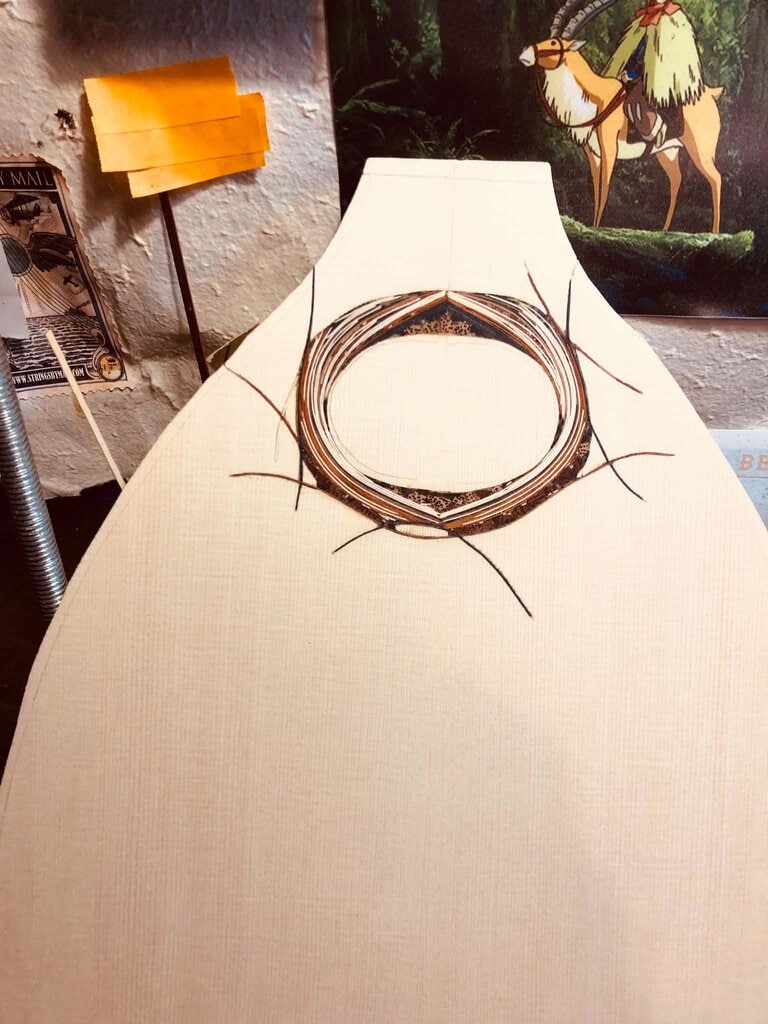
So I use the LMI glue for certain parts, including on the rosettes where I also use CA glue (‘super’ glue) extensively
I’m currently on the hunt for a glue to replace the LMI stuff. I’m hearing good things about Titebond extend on the forums.
.
